

The Essential Candle Making Guide for Beginners 2026
Discover the timeless art of candle making, a creative hobby that brings warmth and charm to any home. This essential guide is designed to help beginners start their candle making journey with confidence and safety at its core. Inside, you will find a clear breakdown of candle types and waxes, a checklist of tools and ingredients, step-by-step instructions, troubleshooting tips, and creative inspiration. With the rising popularity of workshops and courses across the UK, now is the perfect time to master candle making and craft bespoke candles for yourself or as thoughtful gifts.
Understanding Candle Types and Waxes
Candle making begins with understanding the many types of candles and the materials used to create them. The variety on offer allows for creative freedom, but also requires thoughtful selection to ensure success, especially for beginners. Choosing the right candle type, wax, wick, and fragrance forms the foundation of a rewarding candle making experience.
Types of Candles
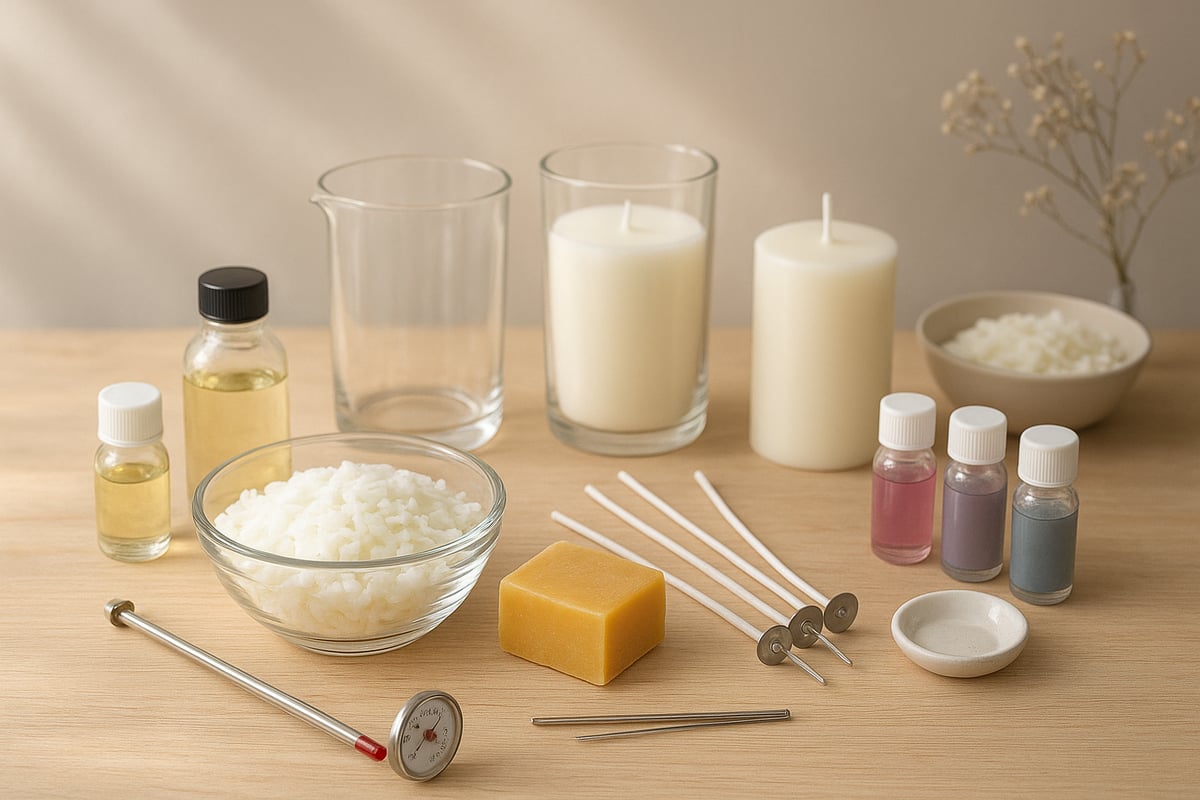
In candle making, the type of candle you choose to create can shape your learning journey. The most popular forms for beginners are container candles and tealights, as they are straightforward and require minimal moulding. Container candles are poured directly into glass jars or tins, making them perfect for custom scents and easy gifting.
Pillar candles stand alone without a container and often feature decorative elements like pressed flowers. While visually striking, they demand careful attention to wick placement and wax selection for even burning. Votives are small, cylindrical candles typically used in groups, while tealights are compact and versatile, ideal for quick projects or testing fragrances. Novelty shapes, such as geometric or sculpted designs, are increasingly popular in 2026, allowing for unique gifts and personal expression.
The choice of candle type affects both burn time and appearance. For example, soy glass container candles, frequently made in UK workshops, offer a clean burn and modern aesthetic. Pillar candles, on the other hand, are chosen for statement pieces and can incorporate creative decorations. Eco-friendly and decorative candles, such as those using plant wax with embedded botanicals, reflect current trends. According to multiple UK workshops, soy candles remain a top choice for beginners due to their ease of use and clean burning properties.
Selecting the right candle type at the start of your candle making journey will help you develop confidence and achieve the results you want.
Choosing the Right Wax
Selecting wax is a key step in candle making, as it directly impacts burn quality, scent throw, and sustainability. There are several options available, each with its strengths and drawbacks.
Common waxes for candle making:
| Wax Type | Pros | Cons | Best For |
|---|---|---|---|
| Paraffin | Affordable, holds scent/dye well | Less eco-friendly, produces soot | Decorative, budget projects |
| Soy | Sustainable, clean burn, easy | Can frost, softer than paraffin | Beginner, scented candles |
| Beeswax | Natural, long burning, subtle scent | Expensive, limited scent throw | Premium, natural candles |
| Coconut | Soft texture, great scent throw | Costly, can be too soft alone | Blended, luxury candles |
| Blended | Balanced properties, versatile | Varies by blend | Commercial, all-purpose |
Soy wax is the most recommended for beginners in candle making, praised for its sustainability, ease of use, and ability to hold fragrances well. Beeswax offers a natural, long-lasting option, but its higher cost and subtle scent may not suit every project. Paraffin remains affordable and colours easily, though it is less environmentally friendly.
Blended waxes combine benefits such as improved scent throw and longer burns, and are common in commercial candles. Many UK courses now focus on soy or plant-based waxes to support eco-friendly practices. For inspiration, browse soy wax scented candle varieties to see how different waxes can enhance your candle making creations.
Choosing wisely will support your goals, whether you prioritise sustainability, cost, or creative experimentation.
Wick and Fragrance Basics
Wick and fragrance selection are essential for safe, high-quality candle making. Wicks come in various types, such as cotton for a classic burn, wood for a crackling effect, and speciality blends for unique projects. Proper wick sizing is crucial, as it ensures a stable flame and prevents issues like tunnelling or soot.
Fragrance options for candle making include essential oils for natural scents and fragrance oils for a broader range of aromas. The fragrance load, typically 6 to 10 percent of wax weight, determines how strong your candle smells. Scented soy candles and wax melts, featured in many beginner courses, demonstrate the impact of pairing the right wick and fragrance with your chosen wax.
Starting with these basics in candle making will set you on the path to achieving beautiful, personalised results.
Essential Tools and Ingredients for Beginners
Embarking on your candle making journey requires the right foundation. Having the proper tools and quality ingredients ensures safety, consistency, and enjoyment from your very first pour.
Candle Making Equipment Checklist
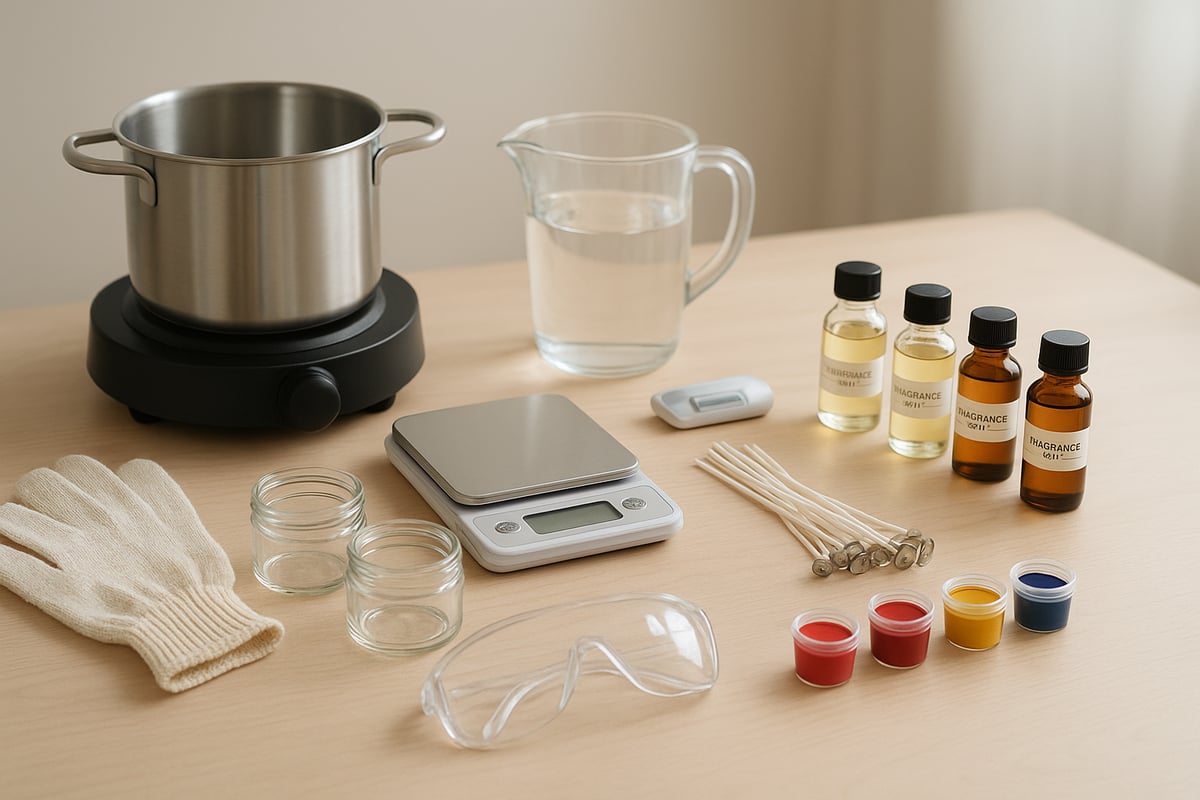
To begin candle making, assemble a reliable set of essential tools. Basic equipment includes a double boiler or wax melter, thermometer for temperature accuracy, and a heat-resistant pouring jug. Accurate digital scales help with precise measurements, while sturdy stirring utensils keep mixtures even.
Containers or moulds, such as glass jars, tins, or silicone forms, are necessary for shaping your candles. Wick holders, glue dots, and safety labels ensure your project is both functional and compliant. Many UK workshops provide complete kits to simplify the process. If you want to get started quickly, consider a starter kit subscription box for all the essentials in one package.
Investing in the right candle making tools from the start helps you achieve safe, consistent results and builds confidence as you progress.
Sourcing Quality Ingredients
Quality ingredients are at the heart of successful candle making. Seek reputable suppliers for your wax, wicks, fragrance oils, and dyes. Purity matters, as high grade materials produce cleaner burns and better scents.
In the UK, many makers prioritise locally sourced, eco friendly options. Over 70 percent of UK candle making workshops now use natural waxes for sustainability. Selecting superior ingredients elevates the final product, ensuring your candles are both beautiful and long lasting.
Choosing the right suppliers for your candle making needs will make a noticeable difference in the outcome of your creations.
Safety Essentials
Safety is paramount in candle making. Always wear gloves, goggles, and protective clothing to guard against hot wax and chemicals. Keep a fire extinguisher within reach and set up your workspace on a stable, heat resistant surface.
Handle hot wax and fragrance oils with care, and consult safety data sheets for any chemicals you use. Certified courses in the UK stress the importance of these protocols, helping you develop safe habits from the outset.
By prioritising safety in every step of candle making, you protect yourself and create a secure environment for creativity.
Optional Additives and Decorations
Once you have mastered the basics of candle making, you can explore creative additives. Colour dyes, mica powders, dried botanicals, and glitter allow you to personalise each candle. Always follow safety guidelines when adding decorations to prevent fire hazards.
Pressed flowers and piped wax designs are popular in UK candle making workshops, offering both beauty and individuality. With careful technique, these extras turn your creations into unique works of art.
Experimenting with decorative elements in candle making is a rewarding way to express your style and expand your skills.
Step-by-Step Candle Making Process
Embarking on your candle making journey begins with a well-organised process. By following a clear sequence of steps, you will achieve safe, consistent, and high-quality results. Each stage, from workspace preparation to testing your finished candle, is essential for both beginners and seasoned makers.
Preparing Your Workspace
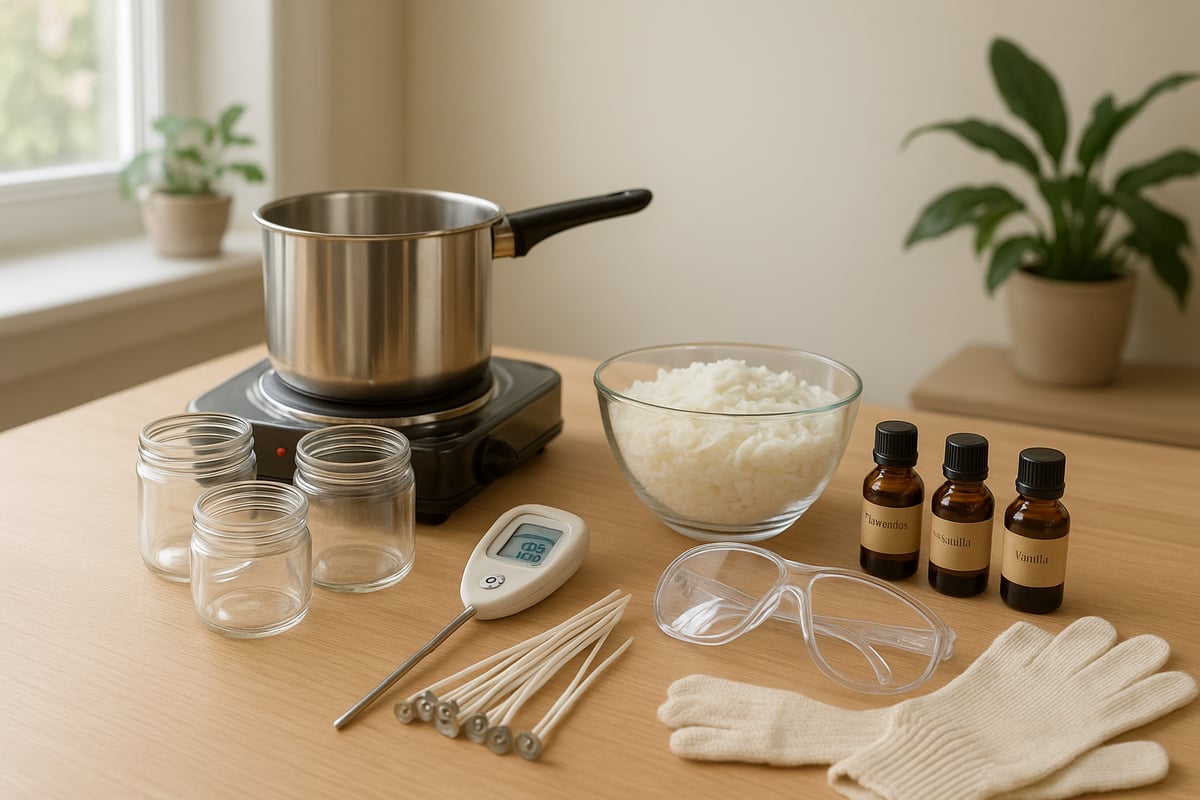
A clean, organised workspace is the foundation of successful candle making. Start by clearing your work surface and wiping it down, ensuring no dust or residue can affect your candles. Lay out all essential tools and ingredients within easy reach.
Good ventilation is crucial for handling hot wax and fragrance oils safely. Open windows or use an extractor fan. If working in a shared space, protect surfaces with newspaper or silicone mats. Many Devon-based courses recommend setting up a dedicated area for candle making to avoid cross-contamination and enhance efficiency.
Measuring and Melting Wax
Accurate measurement is a core skill in candle making. Weigh your wax and any additives using digital scales for precision. Place your chosen wax in a double boiler or a dedicated wax melter, then gently heat it.
Monitor the temperature closely with a thermometer. For soy wax, aim for a melting range of 70 to 80°C. This ensures the wax melts evenly and retains its quality. Stir the wax occasionally to prevent hotspots. Avoid overheating, as this can affect both safety and the candle's final appearance.
Adding Fragrance and Colour
Fragrance and colour bring personality to your candle making projects. Calculate the fragrance load as a percentage of your total wax weight, typically between 6 and 10 percent. Add your chosen scent once the melted wax cools to around 65°C for soy, as this preserves the integrity of the fragrance.
To add colour, incorporate dye chips or mica powder, stirring thoroughly for even distribution. Clovelly Soap Company courses teach scent blending techniques, encouraging beginners to experiment with different combinations for unique results. Remember, the right balance enhances both aroma and visual appeal.
Preparing and Placing the Wick
Correct wick placement is vital for safe and efficient candle making. Secure the wick at the centre of your container or mould using wick holders or centring tools. Attach the wick to the base with a glue dot or sticker, ensuring it stands upright and straight.
Trim the wick to the recommended length, usually around 1 cm above the wax line. This step prevents excessive smoking and ensures a steady burn. Bishop’s Stortford workshops provide hands-on guidance for beginners, making this process straightforward and reliable.
Pouring the Wax
Pouring technique can make or break your candle making experience. Allow the melted wax to cool to the optimal pouring temperature, usually 60 to 65°C for soy wax, to reduce the chance of sinkholes and bubbles.
Pour the wax slowly and steadily into your prepared container or mould. For larger candles or pillars, consider a multi-pour method, adding wax in stages to ensure an even surface. Advanced courses often demonstrate this technique, especially for decorative or complex shapes.
Cooling and Curing
Allow your freshly poured candles to cool undisturbed in a draft-free area. Do not move or touch the containers while the wax sets, as this can cause uneven surfaces or cracks.
Curing is a crucial part of candle making, particularly for soy wax. Leave your candles to cure for 24 to 48 hours, which enhances scent throw and burn quality. Online courses stress the importance of patience during this stage for the best results.
Finishing Touches and Testing
Once your candle has fully cured, remove it from the mould if applicable and clean any rough edges. Attach safety and ingredient labels to inform users and comply with regulations.
Before gifting or selling, conduct a test burn to check wick performance and scent distribution. Trimming the wick before each use is vital for safety and optimal burning. Consider using a wick trimmer for candle care to maintain your homemade candles and ensure a clean, controlled flame. These finishing steps reflect the attention to detail found in artisan candle making.
Troubleshooting Common Candle Making Issues
Even the most experienced candle making enthusiasts encounter challenges from time to time. Understanding how to identify, prevent, and resolve common issues is key to producing safe, high-quality candles. This section offers practical guidance for troubleshooting, ensuring your candle making journey remains enjoyable and rewarding.
Preventing and Fixing Problems
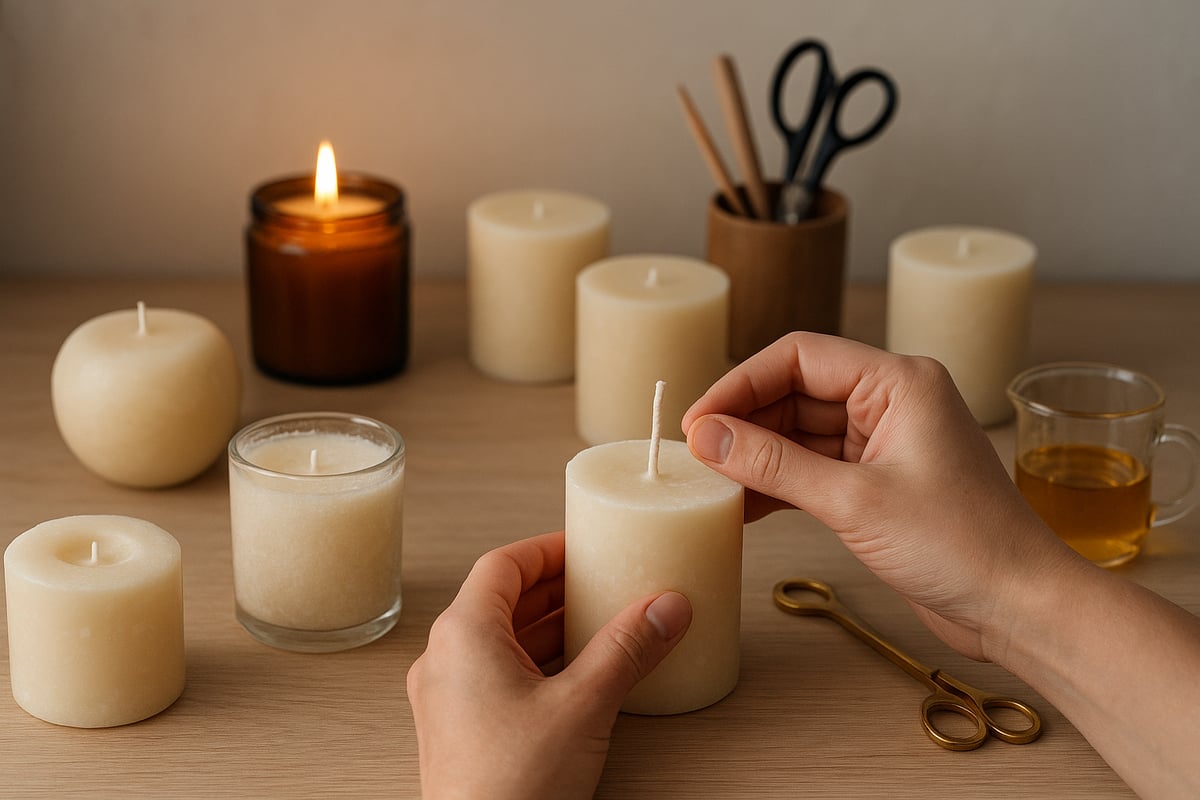
In candle making, common issues such as tunnelling, frosting, sinkholes, wick mushrooming, and poor scent throw can impact both appearance and performance. Identifying these problems early helps maintain quality and safety.
Common Candle Making Issues Table
| Issue | Cause | Solution |
|---|---|---|
| Tunnelling | Wick too small, wax memory | Use correct wick size, full melt |
| Frosting | Soy wax crystals, cooling | Control cooling, use additives |
| Sinkholes | Rapid cooling, air pockets | Pour at correct temp, repour |
| Wick Mushrooming | Oversized wick, fragrance | Trim wick, adjust size |
| Poor Scent Throw | Low fragrance load, temp | Increase load, add at 65°C |
For example, frosting is common with soy wax and can be reduced by cooling candles slowly. Over 80% of beginners experience at least one of these issues in their first three candle making attempts, so do not be discouraged if your first results are imperfect.
Safety and Quality Control Checks
Ensuring your candles are safe to use is essential in candle making. Always check for a stable, even burn and ensure wicks are properly centred and trimmed to avoid soot, smoke, or flickering. Testing is vital—burn each candle in a controlled environment before gifting or selling.
For comprehensive candle safety advice, consult the Candle safety guidelines by Humberside Fire, which detail best practices for safe use and placement of candles at home.
Certified candle making courses emphasise the importance of regular safety checks and proper documentation. Remember, safety is as important as creativity in this craft.
When to Remelt or Repour
Sometimes, candle making does not go as planned, and remelting or repouring is necessary. Signs that your candle needs to be remade include severe tunnelling, large sinkholes, off-centre wicks, or weak fragrance.
To safely remelt, gently heat the wax in a double boiler until fully liquid, then repour into a clean container. Salvaging imperfect candles is common practice—advanced workshops teach repouring techniques to minimise waste and improve results.
Do not hesitate to remake a candle if quality is compromised. Each attempt builds your skills and deepens your understanding of the candle making process.
Resources for Ongoing Support
The candle making community offers a wealth of resources for troubleshooting and skill development. Consider joining:
- Online forums dedicated to candle making
- Local workshops and courses
- Expert helplines and support groups
Many UK-based guides and community groups offer troubleshooting advice tailored to local ingredients and conditions. Seeking help and sharing experiences with others can accelerate your candle making progress and boost your confidence.
Creative Ideas and Inspiration for Your Candle Making Journey
Embarking on your candle making journey brings endless opportunities for creativity and personalisation. Whether you are crafting for relaxation, gifts, or even a small business, exploring new ideas keeps the process rewarding and inspiring. Let us delve into custom scents, decorative trends, thoughtful gifting, and skill-building communities.
Customising Candles with Scents and Colours
Personalising your candle making projects with unique scents and colours is a fantastic way to express your creativity. You can experiment with combining essential oils and fragrance oils, creating signature blends such as floral, woody, or citrus-inspired candles. For inspiration, you might explore guides like the Orange scented candles guide to discover how different notes can transform your creations.
Layering colours, such as ombre or marbled effects, adds visual interest. Many UK workshops teach techniques for piped wax flowers and scented botanicals, which can turn a simple candle into a statement piece. Remember, candle making allows you to tailor every detail, making your gifts or home décor truly unique.
Decorative Techniques and Trends
Decorative trends in candle making are constantly evolving, with makers increasingly embracing eco-friendly and artistic approaches. Embedding botanicals like dried flowers or herbs is popular, offering a natural and elegant finish. Using silicone moulds enables you to craft intricate shapes and textures, from geometric patterns to delicate florals.
Minimalistic designs paired with sustainable packaging are in demand, reflecting a shift towards conscious crafting. Painted or pressed flower candles, often seen in UK classes, showcase how traditional skills can blend with modern aesthetics. Candle making trends for 2026 focus on both beauty and sustainability, ensuring your creations stand out.
Gifting and Selling Your Creations
Handmade candles make thoughtful gifts, especially when presented in creative packaging such as reusable tins, glass jars, or fabric wraps. If you are considering selling your candle making creations, it is essential to stay informed about legal requirements. For UK makers, understanding legal requirements for selling homemade candles in the UK ensures your products are safe and compliant.
Market demand for handcrafted candles and wax melts has grown significantly, with a 20 percent increase in the UK since 2024. Success stories from workshop participants highlight how attention to detail and proper labelling can set your products apart, whether you are selling at local markets or online.
Expanding Skills with Courses and Communities
Developing your candle making skills is easier than ever, thanks to a wealth of workshops and online courses across the UK. Beginners benefit from hands-on sessions, learning everything from basic techniques to advanced scent blending. Courses run by groups such as Clovelly Soap Company and Candle Shack cater to all levels.
Joining a candle making community, whether in person or online, provides ongoing support, troubleshooting advice, and networking opportunities. Sharing ideas and celebrating achievements with fellow makers can build confidence and spark inspiration for your next project.
Essential Candle Making Tips for 2026
Embarking on your candle making journey in 2026 means staying ahead with the latest practices and insights. Whether you are a hobbyist or aspiring entrepreneur, these essential tips will help you create beautiful, safe, and high-quality candles that reflect current trends and standards.
Staying Safe and Sustainable
Safety is the cornerstone of successful candle making. Always use gloves, goggles, and protective clothing to minimise risks, and keep your workspace clear and well-ventilated. Set up a fire extinguisher nearby, and store hot wax and fragrance oils away from children and pets.
Sustainability is just as crucial. Opt for natural, biodegradable ingredients such as soy or beeswax, and choose reusable or recyclable containers. Properly dispose of leftover wax and packaging, ensuring your candle making has a positive impact on the environment. For those considering selling their creations, understanding candle compliance regulations in the EU and UK is essential to meet legal obligations and keep your customers safe.
Mastering the Art of Scent Blending
A key skill in candle making is creating unique and harmonious fragrances. Start by learning about top, middle, and base notes, much like composing a symphony. Balancing these elements ensures your scent lingers pleasantly and evolves over time.
Experiment with combining fragrance oils and essential oils, recording your favourite blends for future reference. Many advanced workshops in the UK now offer lessons on bespoke scent creation, guiding you through subtle variations and layering techniques. With patience and practice, your candle making projects will become truly distinctive and memorable.
Perfecting Your Candle for Optimal Performance
Achieving a professional finish in candle making requires careful attention to detail. The size and placement of your wick are fundamental for an even, stable burn. Use a table like the one below to guide your choices:
| Candle Diameter | Wick Type | Recommended Size |
|---|---|---|
| Up to 5 cm | Cotton | Small |
| 5-7 cm | Cotton/Wood | Medium |
| Over 7 cm | Wood/Specialty | Large |
Test different wax blends to find the best combination for your needs. After curing, always perform a test burn to assess scent throw and wick performance. Consistent quality checks will ensure every candle making session leads to reliable, beautiful results.
Keeping Up with Candle Making Trends
Stay informed about new developments in the candle making world. In 2026, refillable candles, botanical infusions, and digital workshops are rising in popularity. Makers are also experimenting with smart candle accessories and innovative design software.
Awareness of market trends can help you stand out. For instance, the UK scented candles market outlook 2024-2033 highlights increased demand for eco-friendly, artisanal products and creative packaging. Following these trends will keep your candle making relevant and appealing to modern consumers.
Building Confidence and Enjoyment in Candle Making
Confidence grows with experience and community support. Do not be discouraged by early mistakes; every candle making attempt is a learning opportunity. Celebrate your successes, no matter how small, and keep refining your techniques.
Joining local workshops or online groups provides valuable feedback and inspiration. Many beginners have transformed their candle making passion into thriving businesses or fulfilling hobbies by sharing their progress and seeking advice. Remember, the journey is as rewarding as the final candle you create.
Now that you have a solid foundation in candle making and understand how scent can transform your space, why not experience the results for yourself? Whether you are looking for inspiration or want to see how bespoke Scottish craftsmanship comes to life, exploring professional creations can spark new ideas for your own projects. If you are keen to enjoy the warmth and fragrance of a beautifully crafted candle while perfecting your own technique, I recommend you Shop Christmas Candles for a touch of festive magic and a true taste of Scottish artistry.