

7 Essential Good Candle Wax Choices for 2026
Choosing the right candle wax has never been more important for eco-conscious and health-aware consumers in 2026. The type of wax used can influence a candle’s scent, burn time, and its overall impact on the environment.
Selecting a good candle wax not only enhances the look and feel of your candles but also supports sustainability and personal wellbeing. In this article, we will explore seven essential candle wax options for 2026, helping you make the best choice for your home or business.
Understanding Candle Wax: Key Factors to Consider
Candle wax is the foundation of every candle, affecting both how it looks and how it performs. Good candle wax plays a central role in how a candle burns, how it releases fragrance, and how it impacts the environment. For anyone making or choosing candles in 2026, understanding the key properties of candle wax is more important than ever.
What is Candle Wax?
Candle wax is the primary fuel that enables a candle to burn and emit light or fragrance. A good candle wax melts evenly, supports the wick, and allows the scent to disperse effectively. In modern candle making, wax acts as a vehicle for fragrance oils and dyes, ensuring a stable and reliable burn. The choice of wax can define the quality and appeal of the final candle.
Factors Influencing Candle Wax Choice
Selecting a good candle wax involves weighing several factors. Burn quality is crucial, as it determines how cleanly and evenly a candle burns. Scent throw, or how well a candle releases fragrance, depends on both the wax type and its compatibility with fragrance oils. Eco-friendliness is another key consideration, with many consumers seeking renewable and biodegradable options. Cost also plays a role, as some premium waxes can be significantly more expensive.
When evaluating good candle wax, makers look for options that balance performance, sustainability, and affordability. For example, soy and coconut waxes offer excellent scent throw and clean burning, while paraffin-free blends might be chosen for their customisable properties and reduced environmental impact.
Health, Safety, and Environmental Impact
The health and environmental impact of candle wax has become a growing concern. Some waxes, especially those derived from petroleum, may produce soot or release toxins that affect indoor air quality. In contrast, natural waxes like soy, rapeseed, and beeswax are generally cleaner burning and produce less smoke.
Sustainability is also a major factor. Good candle wax should ideally come from renewable resources and be biodegradable, reducing its carbon footprint. For those interested in the environmental implications of different waxes, the Environmental Impact of Candle Emissions provides an in-depth analysis of emissions and air quality effects.
Trends and Sourcing in 2026
The candle industry in 2026 is seeing a strong shift towards natural, vegan, and cruelty-free waxes. Consumers are increasingly asking for good candle wax that is traceable and ethically sourced. Compatibility with a wide range of fragrance oils, dyes, and additives is a must for both hobbyists and professional makers.
Sourcing and traceability are now essential, with brands highlighting local or certified ingredients. Table 1 below offers a simple comparison of natural and synthetic waxes:
| Wax Type | Source | Biodegradable | Typical Use |
|---|---|---|---|
| Soy, Rapeseed | Plant-based | Yes | Eco-friendly candles |
| Beeswax | Animal-based | Yes | Traditional, luxury |
| Paraffin, Gel | Petroleum | No | Decorative, novelty |
Choosing a good candle wax is about more than just how a candle looks or smells. It requires a balance of performance, health, sustainability, and personal values. By staying informed, you can make choices that are better for your home, your wellbeing, and the planet.
7 Essential Good Candle Wax Choices for 2026
Choosing a good candle wax can transform your candle-making experience, whether you craft at home or operate a growing brand. The right wax not only affects how your candle looks and burns but also has a direct impact on scent diffusion, sustainability, and health. Below, we break down the seven essential good candle wax options for 2026, highlighting their unique strengths, ideal applications, and what makes each one stand out in a rapidly evolving market.
1. Soy Wax
Soy wax continues to dominate the good candle wax market in 2026, prized for its balance of affordability, sustainability, and performance. Sourced from renewable soybeans, it is biodegradable and burns cleanly, producing minimal soot compared to paraffin. In 2026, soy wax remains widely available, with pricing stable due to robust global soy production.
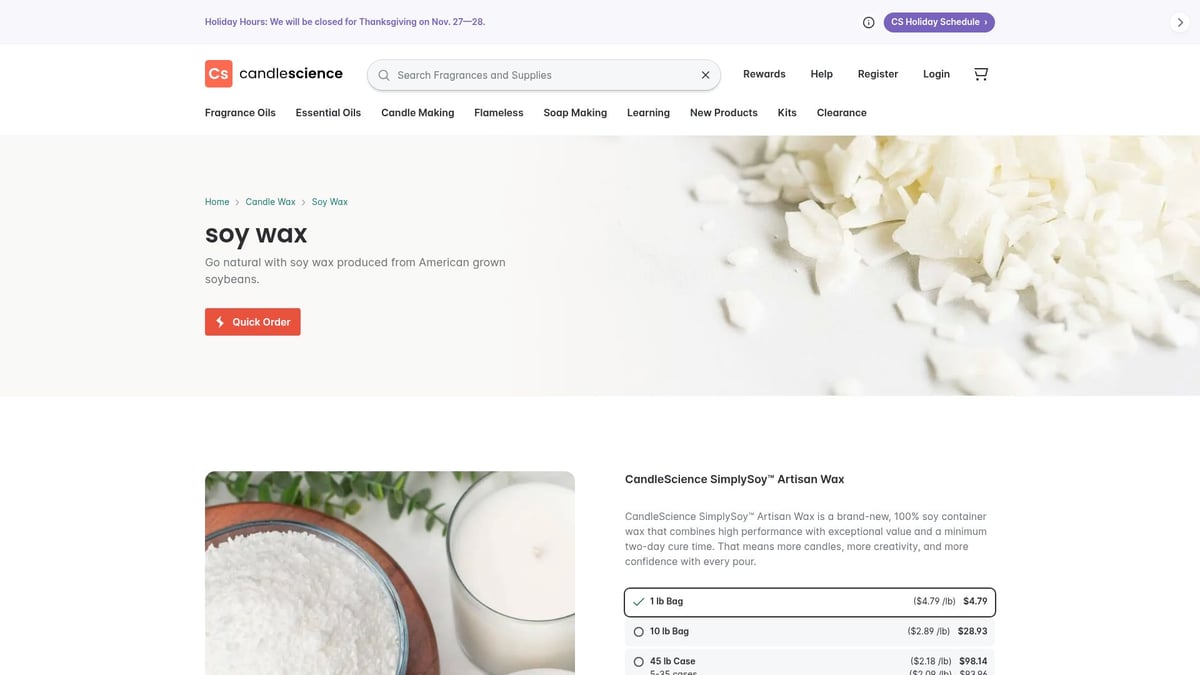
One of the standout features of soy wax is its excellent scent throw, making it a go-to choice for both home fragrance enthusiasts and artisan brands. It offers a long burn time, which means candles last longer, providing better value for money. However, soy wax can sometimes develop a frosted appearance, especially in cooler environments, and may require additives for optimal performance in certain applications.
Pros of choosing soy wax as a good candle wax include its ease of use, compatibility with a wide range of fragrance oils, and strong sustainability credentials. It is particularly popular among eco-conscious consumers who prioritise renewable resources and a lower environmental impact. Soy wax accounted for over 60% of natural wax candle sales in 2025, according to Statista.
A notable example is its use by top eco-friendly candle brands, who highlight the wax's clean burn and plant-based origins. For those interested in learning more about the environmental benefits of soy wax, resources such as the Soy Wax Environmental Benefits page provide further insight.
In summary, soy wax remains a leading good candle wax for 2026, valued for its sustainability and reliable performance.
2. Coconut Wax
Coconut wax has firmly established itself as a premium good candle wax choice for 2026, known for its ultra-clean burn and luxurious finish. Produced from the meat of coconuts, this wax is both renewable and highly sustainable, with plantations typically requiring less pesticide and water compared to other crops. Its creamy, smooth texture allows for a visually appealing candle, while its superior scent throw is favoured by luxury and wellness brands.
In terms of pricing, coconut wax sits at the higher end of the market. This is due to both its premium positioning and the limited supply relative to more common waxes like soy. However, the demand for coconut wax candles has surged, with a 40% increase in product launches from 2024 to 2026 according to MarketWatch.
The main benefits of coconut wax as a good candle wax include its ability to blend seamlessly with other natural waxes, enhancing burn quality and fragrance retention. Its smooth, creamy surface creates a high-end look that appeals to gift buyers and those seeking a spa-like ambience at home. On the downside, coconut wax can be sensitive to temperature fluctuations and is less widely available, making it a more exclusive option.
Coconut wax is particularly popular in high-end candle lines and wellness collections, where its premium attributes and sustainable profile are key selling points. For those looking to create an indulgent, eco-friendly candle, coconut wax is a standout good candle wax for 2026.
3. Rapeseed Wax
Rapeseed wax is gaining traction as a good candle wax, especially among European manufacturers prioritising local sourcing and low carbon footprints. Derived from rapeseed oil, this wax is typically produced within Europe, reducing transportation emissions and supporting local agriculture. Its price is competitive, especially for UK and EU brands, and its supply chain is more transparent due to regional production.
Core features of rapeseed wax include its vegan credentials, non-GMO status, and excellent biodegradability. These qualities make it a leading choice for sustainable product lines and for consumers with allergies or sensitivities. The wax burns cleanly, provides a stable flame, and is compatible with most fragrance oils and dyes, making it versatile for various candle styles.
One of the standout benefits of rapeseed wax as a good candle wax is its minimal environmental impact. By supporting local farmers, brands can reduce their overall carbon footprint. However, rapeseed wax is less common outside Europe, and supply can be affected by seasonal fluctuations in crop yields.
Rapeseed wax is increasingly favoured by artisan candle makers in the UK and EU, reflecting a projected 25% growth in UK market share by 2026 (Candle Industry News). Brands seeking to differentiate themselves with a local, sustainable story are turning to rapeseed wax as their good candle wax of choice.
4. Beeswax
Beeswax has long been revered as a traditional good candle wax, valued for its natural purity and unique benefits. Harvested from honeybee hives, beeswax emits negative ions when burned, which help purify the air and reduce indoor pollutants by up to 30% (Environmental Health Perspectives). Its subtle honey aroma and beautiful golden hue add a touch of luxury to any candle.
In 2026, beeswax remains one of the cleanest burning waxes available, producing little to no soot and offering a long-lasting, dripless burn. While its price point is higher than many plant-based waxes, the demand persists among traditionalists, allergy sufferers, and eco-friendly buyers who appreciate its non-toxic properties.
The primary advantages of beeswax as a good candle wax include its natural air-purifying qualities, aesthetic appeal, and exceptional burn quality. However, it is not a vegan option and is limited by the availability of ethically sourced beeswax, which can drive up costs. Despite this, beeswax is a favourite in heritage and luxury candle brands, where authenticity and tradition are paramount.
For those seeking a good candle wax that combines tradition, health benefits, and a beautiful finish, beeswax stands out as a top choice for 2026.
5. Paraffin-Free Blends
Paraffin-free blends are reshaping the good candle wax market for 2026, offering a cleaner and more customisable alternative to traditional paraffin. These blends combine natural waxes such as soy, coconut, and rapeseed to harness the strengths of each ingredient, resulting in improved burn quality, scent throw, and overall performance.
Pricing for paraffin-free blends varies depending on the specific combination of waxes, but they are generally positioned as a mid-to-premium option. The key advantage is their versatility, as manufacturers can tailor blends to suit different candle types and fragrance profiles. This makes them especially appealing to boutique brands, health-conscious consumers, and those sensitive to the by-products of paraffin.
A major benefit of these blends as a good candle wax is their cleaner burn, with reduced soot and toxins, contributing to better indoor air quality. However, creating the perfect blend can require some experimentation, and costs can fluctuate depending on the chosen ingredients.
Paraffin-free blends have become a mainstay in wellness and aromatherapy ranges, reflecting growing demand for healthier home fragrance options. In 2025, they accounted for 35% of new candle launches according to Euromonitor, solidifying their place as a leading good candle wax for the future.
6. Palm Wax (Sustainably Sourced)
Palm wax offers a unique aesthetic with its crystalline finish, making it a standout good candle wax for decorative and designer candles in 2026. When responsibly sourced and RSPO-certified, palm wax is renewable and supports sustainable agriculture. Its firm texture allows for dramatic crystal patterns, providing a distinctive look that appeals to premium markets.
Pricing for palm wax is influenced by sourcing practices, with ethical, RSPO-certified wax commanding a premium. The main benefits include a long burn time, strong scent throw, and compatibility with a range of dyes and fragrances. However, the environmental impact of palm production remains a concern, making responsible sourcing essential for brands seeking to minimise their footprint.
The pros of palm wax as a good candle wax include its memorable visual effects and suitability for statement candles. Cons involve the difficulty in sourcing truly sustainable palm wax and potential ethical questions if not RSPO-certified. Despite this, RSPO-certified palm wax usage has risen by 50% in ethical candle lines since 2024 (RSPO Reports), reflecting increased consumer awareness.
For decorative candle makers and eco-aware consumers, palm wax offers a blend of beauty and sustainability, provided sourcing is verified.
7. Gel Wax
Gel wax stands out among good candle wax options for its transparency and versatility, ideal for novelty and artistic candle designs. Made from mineral oil and polymer resin, gel wax is flexible, slow-burning, and perfect for embedding decorative items such as shells, glitter, or botanicals.
In 2026, gel wax is priced competitively for specialty use, making it accessible for creative projects and custom gifts. The key benefits include a unique, eye-catching appearance and a long burn time, adding value for both makers and recipients. However, as a petroleum-based product, gel wax is not biodegradable, and it requires special wicks to ensure safe burning.
Despite its limitations, gel wax is popular in themed and novelty candles, accounting for 12% of novelty candle sales in 2025 (Candle Market Insights). Its ability to hold objects and create bespoke designs makes it a favourite among artistic candle makers seeking a good candle wax with visual impact.
In summary, gel wax is best suited for those prioritising creativity and customisation, offering something truly different in the world of good candle wax.
Candle Wax Trends & Innovations for 2026
The world of good candle wax is evolving rapidly, with 2026 set to be a landmark year for both candle makers and consumers. Changing values, new technologies, and growing environmental awareness are all reshaping expectations. Understanding these trends is crucial for anyone looking to make informed choices or stay ahead in the market.
Sustainability and Traceability Lead the Way
In 2026, sustainability is the driving force behind good candle wax innovations. Consumers are prioritising biodegradable, renewable materials, and demanding full transparency about sourcing. Traceability is now a standard expectation, with brands investing in certifications and clear supply chains.
According to recent Candle Wax Market Growth Projections, the global candle market is experiencing a significant shift towards eco-friendly waxes. Brands that can verify the origin and environmental impact of their wax are gaining trust and loyalty.
Rise of Hybrid and Vegan Waxes
Hybrid wax blends are gaining momentum as candle makers strive for the perfect balance of performance and sustainability. These blends, often combining soy, coconut, and rapeseed, optimise burn quality and scent throw while reducing environmental impact.
Vegan and cruelty-free options are no longer niche. The demand for plant-based good candle wax has surged, and suppliers are responding with innovative formulations that meet ethical and performance standards. Consumers now expect clear labelling and third-party certifications.
Scent and Performance Innovations
Advances in fragrance technology are transforming the way good candle wax performs. Modern waxes can hold higher fragrance loads, resulting in stronger and more consistent scent diffusion. This is particularly important for wellness and aromatherapy candles, where scent quality is essential.
Manufacturers are also improving burn times and reducing soot, further appealing to health-aware buyers. The market is seeing a rise in waxes specifically engineered for optimal air quality and minimal emissions.
Packaging and Artisan Trends
Sustainable packaging is now integral to the good candle wax experience. Biodegradable containers, reusable jars, and plastic-free wraps are becoming industry standards. Artisan and small-batch production is thriving, as consumers seek unique, handcrafted candles that reflect personal values.
To see how these innovations translate into finished products, browse a Candle Collection Overview for inspiration. Many brands are showcasing candles made with cutting-edge waxes and eco-friendly packaging.
Looking Ahead
The future of good candle wax is bright, driven by a focus on sustainability, performance, and authenticity. Whether you are a consumer or a candle maker, staying informed about these trends will help you choose the best wax for your needs in 2026.
How to Choose the Right Candle Wax for Your Needs
Selecting a good candle wax is crucial for achieving the right balance of performance, aesthetics, and sustainability in your candles. Whether you are crafting for personal enjoyment or building a business, understanding your specific needs will help you make the most informed choice.
Assess Your Priorities
Begin by clarifying what matters most to you when selecting a good candle wax. Are you prioritising eco-friendliness, burn time, scent throw, or cost-effectiveness? For those concerned with health and the environment, natural waxes like soy or rapeseed offer renewable and biodegradable options. If budget is a key factor, traditional blends might be more accessible, though they may compromise on sustainability or air quality. Consider who will use the candles and where they will be burned, as this impacts your priorities. Reflecting on these factors will guide you towards the most suitable wax for your unique situation.
Match Wax to Candle Style and Function
Different candle types demand different wax characteristics. For container candles, a good candle wax should be soft enough to adhere to the vessel and hold fragrance well. Pillar and votive candles require a firmer wax that retains its shape outside a mould. If you are making novelty or decorative candles, gel wax may be ideal due to its transparency and flexibility. Think about the intended use: is it for aromatherapy, décor, or gifting? Matching the wax to the candle’s style and function ensures optimal performance and satisfaction, both visually and practically.
Sourcing, Testing, and Common Mistakes
Sourcing ethically is increasingly important. Choose suppliers with transparent sourcing and certifications, especially for palm or beeswax. Always test small batches of good candle wax with your chosen fragrances and wicks before scaling up. This helps you avoid issues like poor scent throw or uneven burning. Many overlook the impact of proper accessories on burn quality; using Candle Accessories for Better Burning can help maximise safety and performance. Avoid common mistakes such as ignoring wax–fragrance compatibility or skipping test burns, as these can undermine even the best wax choices.
Resources and Real-World Examples
For further research, consult independent studies such as the Candle Wax Emissions Study to compare environmental and health impacts. Explore supplier directories for certified, traceable good candle wax options. Many successful brands showcase their wax choices, offering valuable case studies and inspiration. Look for industry forums and communities for practical tips and troubleshooting advice. By learning from both scientific resources and real-world examples, you can confidently select the best wax for your needs and create candles that delight your customers or loved ones.
After exploring the key factors and latest trends shaping candle wax choices for 2026, you now have the insights to make informed, meaningful decisions for your own space or business. Whether you prioritise sustainability, unique scents, or artisan craftsmanship, choosing the right wax brings your vision to life and supports your values. If you’re feeling inspired to experience these innovations firsthand, you might enjoy discovering our seasonal scents crafted with care in Scotland. Treat yourself or a loved one and bring warmth into your home with our festive selection—explore Shop Christmas Candles for a touch of Scottish creativity.