

Candle Production Machine Guide: Expert Insights for 2025
The candle industry is experiencing a remarkable transformation, powered by cutting-edge automation and innovation. In 2025, investing in the right candle production machine can set your business apart, whether you are just starting out or scaling up established operations.
This expert guide is your roadmap to navigating the evolving world of candle manufacturing. We will explore machine types, essential features, production processes, cost breakdowns, and the latest market trends.
Ready to make informed decisions and boost your production efficiency? Let’s dive in and discover the future of candle making together.
The Modern Candle Production Landscape in 2025
The candle industry in 2025 is experiencing unprecedented growth, driven by evolving consumer tastes and rising demand for both decorative and functional candles. With a global push toward wellness and ambience at home, manufacturers are under pressure to deliver higher volumes while maintaining consistent quality.
The adoption of the candle production machine is central to this transformation. Businesses that once relied on manual methods now increasingly invest in automation, seeking to scale up output and reduce manual errors. Automated systems allow for rapid production without sacrificing precision, ensuring that even as demand surges, consistency and quality are not compromised.
Environmental considerations are reshaping how manufacturers select their candle production machine. Regulatory bodies across the UK and EU have introduced stricter standards, requiring energy-efficient equipment and promoting eco-friendly waxes. Machines with lower energy consumption and compatibility with sustainable materials are now industry benchmarks. This trend not only supports regulatory compliance but also appeals to eco-conscious consumers.
Let's examine some key market statistics in the UK and EU candle sector:
| Region | 2025 Market Value | Projected Growth Rate | Consumer Trend |
|---|---|---|---|
| UK | £500M | 7% YoY | Natural wax, premium scents |
| EU | €2.2B | 6% YoY | Sustainable, customisable candles |
Technology has become indispensable for quality control. Modern candle production machine models feature smart monitoring systems and digital controls, enabling real-time adjustments and batch traceability. For large-scale producers, automation has translated into remarkable cost savings. Some have reduced their labour costs by up to 30% by integrating advanced machinery and streamlining workflows.
Despite these advantages, manufacturers face new challenges. Consumer preferences are shifting rapidly, with heightened interest in natural waxes, artisanal finishes, and bespoke fragrances. Adapting production lines to accommodate these trends requires flexible, modular equipment and ongoing investment in research and development.
Opportunities abound, especially for small and mid-sized businesses. Niche brands can leverage compact, semi-automatic machines to produce limited batches of luxury or personalised candles. By focusing on agility and customisation, these businesses can set themselves apart in a competitive landscape. For comprehensive insights into global market growth and technology trends, the Global Candle Making Machine Market Insights, Forecast to 2032 offers valuable data for strategic planning.
In summary, the 2025 candle production landscape is shaped by automation, sustainability, and shifting consumer demands. Choosing the right candle production machine, aligned with these trends, is now essential for manufacturers aiming to thrive.
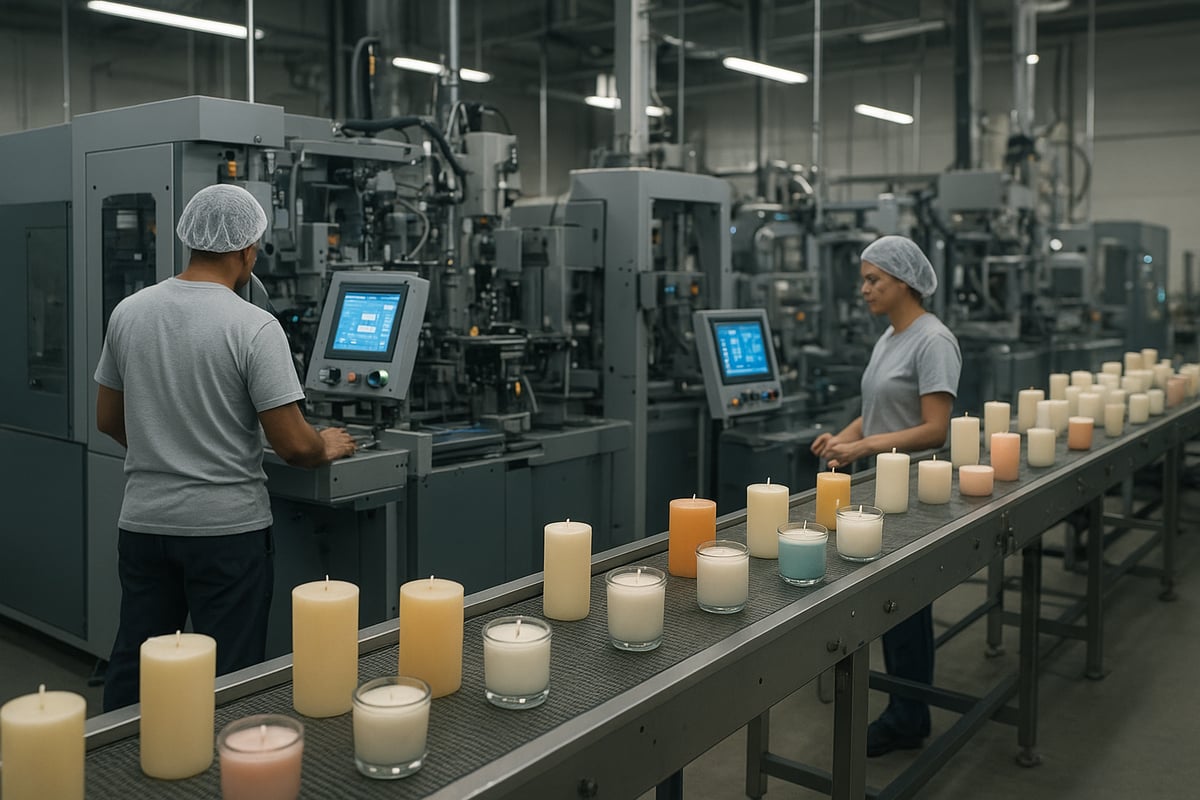
Types of Candle Production Machines
Selecting the right candle production machine is a pivotal decision for any manufacturer aiming to thrive in 2025’s competitive market. With advanced technology and evolving consumer trends, understanding the range of machines available is essential for efficient, scalable, and high-quality candle making.
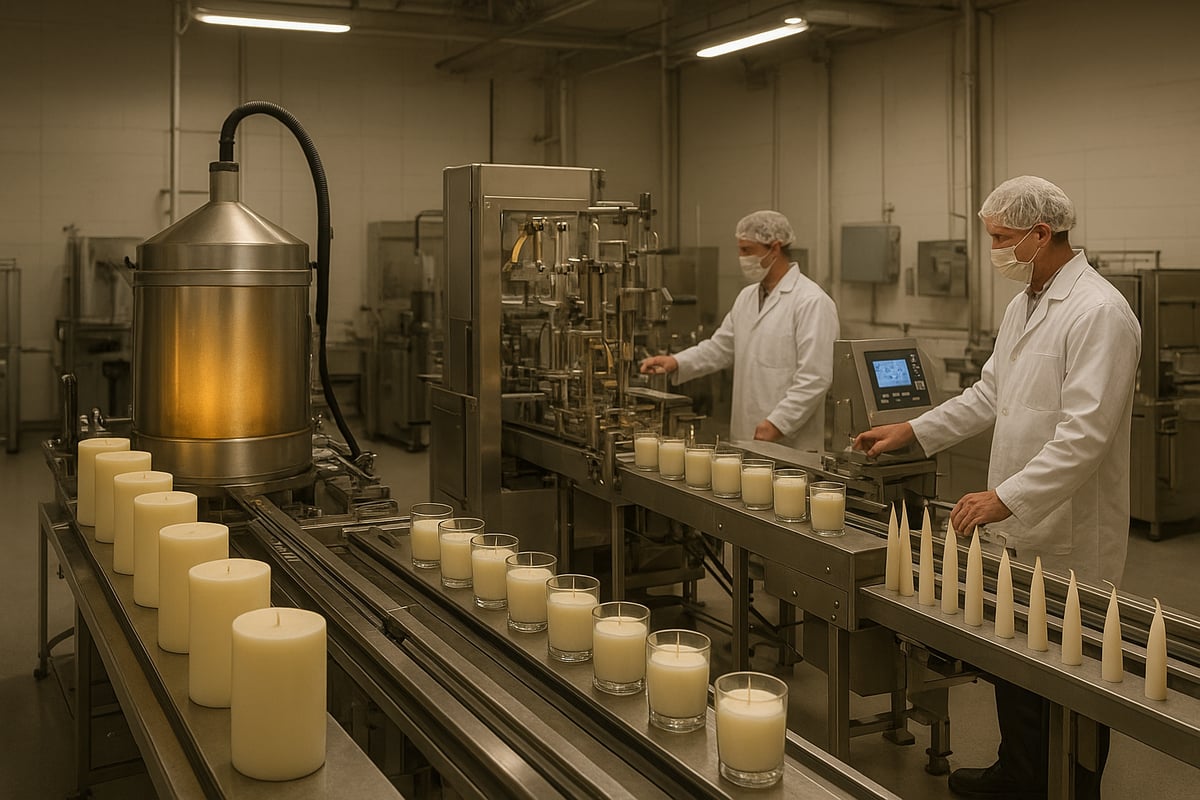
Manual, Semi-Automatic, and Fully Automatic Machines
Candle production machines fall into three main categories: manual, semi-automatic, and fully automatic. Each type offers distinct operational methods and suits different production needs.
Manual machines require hands-on operation for every step, making them ideal for hobbyists or artisan producers. They are affordable and straightforward, but output is limited, with typical rates around 100 candles per hour. The learning curve is gentle, though scaling up is challenging.
Semi-automatic machines blend manual oversight with automated features. Operators may load wax or adjust settings, but pouring and moulding are often automated. This results in higher productivity, with batch sizes ranging from several hundred to 1,000 candles per hour. These machines are well-suited for small businesses aiming to expand their reach.
Fully automatic candle production machines handle the entire process, from wax melting to finishing. They excel in industrial settings, delivering output rates of 1,000 candles per hour or more. Investment costs are higher, and staff training is essential, but these machines enable significant labour savings and consistent quality.
| Machine Type | Output Rate (candles/hr) | Ideal User | Cost Implication |
|---|---|---|---|
| Manual | ~100 | Hobbyist/Artisan | Low |
| Semi-Automatic | 500–1,000 | Small Business | Moderate |
| Fully Automatic | 1,000+ | Industrial | High |
For those considering scaling their operations, exploring wholesale candle production insights can provide valuable guidance on machine selection and demand forecasting.
Choosing the right candle production machine type is crucial for balancing productivity, cost, and ease of use.
Key Machine Categories: Melters, Pourers, Moulders, and Finishers
A modern candle production machine system is made up of several specialised units, each designed to optimise a specific stage of manufacturing.
Melters are responsible for efficiently heating paraffin, soy, or beeswax. Advanced models offer precise temperature control and large capacity, ensuring uniform melting and preventing scorching.
Pourers deliver melted wax into moulds or containers. Automated pourers feature programmable settings for accuracy and speed, reducing the risk of spillage or uneven fills, while manual pourers offer flexibility for unique or small-batch runs.
Moulders shape the molten wax into pillars, votives, containers, or novelty forms. Some candle production machines allow for quick changeovers between mould types, enabling manufacturers to diversify their product lines without lengthy downtime.
Finishers handle the final touches—trimming excess wax, centring wicks, labelling, and packaging. Integration of these machines streamlines the workflow, improving efficiency and consistency.
A well-integrated candle production machine line ensures each component works in harmony, reducing manual intervention and boosting overall output. Investing in quality melters, pourers, moulders, and finishers sets the foundation for reliable and scalable candle making.
Choosing by Candle Type: Pillar, Container, Taper, and Novelty
Not all candle production machines are created equal when it comes to handling different candle styles. The type of candle being produced directly influences machine compatibility, output quality, and operational flexibility.
For pillar candles, robust moulding and demoulding systems are essential to prevent cracking or deformities. Container candle production machines often focus on precise pouring and temperature regulation, especially when working with glass or ceramic vessels.
Taper candles require machines equipped with specialised dipping or extrusion features. Novelty candles, such as those with intricate shapes or embedded designs, benefit from modular moulders with detailed customisation options.
Wax type also plays a vital role. Machines optimised for paraffin may not suit soy or beeswax without adjustable temperature and mixing controls. Luxury and scented candle production machines often include advanced scent integration and gentle handling to preserve fragrance quality.
Manufacturers seeking to diversify their offerings should prioritise flexibility and adaptability in their candle production machine setup. This approach ensures the highest standards of finished product quality, whether producing classic tapers or bespoke, scented creations.
Essential Features and Innovations in 2025 Candle Production Machines
The candle production machine landscape in 2025 is defined by rapid innovation and a clear focus on operational excellence. New machines blend cutting-edge automation, sustainable design, and robust safety features to help manufacturers meet rising quality and efficiency standards.
These essential advancements are not just for large factories. Even small and mid-sized producers can now access technology that was once reserved for industry giants. Let’s explore the features shaping the next generation of candle production.
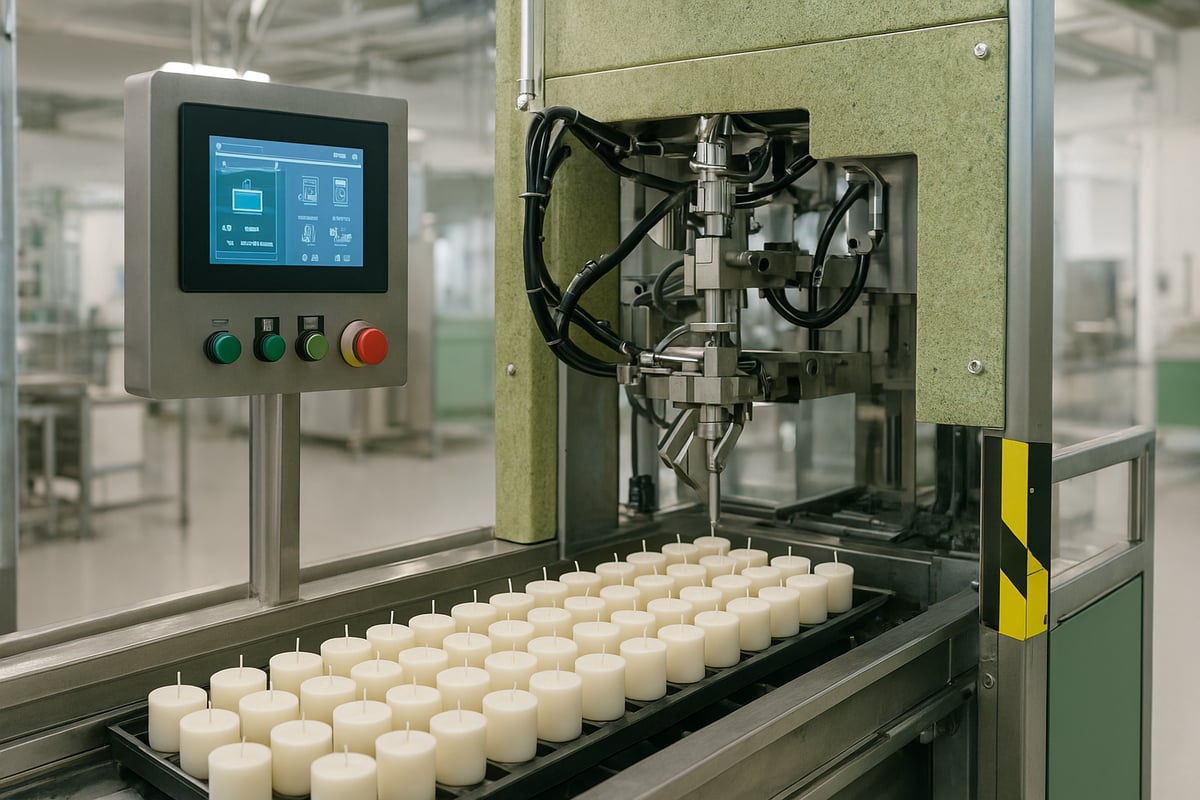
Automation, Digital Controls, and Smart Monitoring
Today’s candle production machine is smarter and more intuitive than ever. Touchscreen interfaces make setup simple, allowing operators to select recipes, adjust wax temperatures, and fine-tune pouring volumes with a few taps. Programmable settings ensure each batch is consistent, regardless of operator skill.
Remote monitoring is now standard. Machines connect to factory networks, letting managers track performance, receive maintenance alerts, and even diagnose faults from a distance. This level of oversight reduces downtime and keeps production flowing smoothly.
Smart monitoring systems use sensors to track temperature, wax viscosity, and fill levels in real time. This data feeds back into the machine’s controls, automatically adjusting parameters to prevent defects. For example, by closely monitoring temperature, some manufacturers have cut candle rejects by 20 percent and improved batch traceability.
These advances mean that whether you run a small workshop or a large plant, a candle production machine can deliver reliable output and free up your team to focus on creativity and quality.
Energy Efficiency and Sustainability
Energy efficiency is at the forefront of every new candle production machine. Manufacturers now use eco-friendly heating elements, high-grade insulation, and smart power management to lower energy consumption. Some of the latest models use up to 15 percent less electricity than machines from just a few years ago.
Sustainability goes beyond energy savings. Machines are designed to work with natural and recycled waxes, and many include systems for collecting and reusing excess wax. This reduces waste and supports circular production models.
Compliance with strict UK and EU environmental regulations is standard. Machines come with certifications for low emissions and are built to handle eco-friendly materials without compromising performance. For a deeper look at how innovation and sustainability are shaping the industry, see 2025 Candle Manufacturing Trends: Innovation & Sustainability Insights.
Here’s a quick comparison of energy-saving features:
| Feature | Benefit |
|---|---|
| Eco heating elements | Lower electricity costs |
| Advanced insulation | Reduced heat loss |
| Wax recycling system | Less material waste |
Choosing a candle production machine with these innovations helps businesses reduce their ecological footprint and operating costs.
Safety, Maintenance, and Reliability
Safety is a top priority in every candle production machine. Built-in features like automatic shutoff, overheat protection, and emergency stop buttons are standard. These systems protect both operators and equipment, ensuring a safer workplace.
Maintenance routines are now simpler. Machines are designed for quick cleaning, with accessible parts and intuitive schedules. Many suppliers offer remote diagnostics and proactive support, minimising downtime and extending machine life.
Reliability is further reinforced by robust manufacturer warranties and dedicated service teams. For instance, professional candle makers report up to 25 percent less downtime after switching to machines with enhanced self-monitoring and support features.
By investing in a modern candle production machine, manufacturers gain peace of mind, knowing their operations are protected and their investment is built to last.
Step-by-Step: How Modern Candle Production Machines Work
Modern candle production machines have revolutionised the way candles are made in 2025. These machines streamline every stage, from raw wax to finished product, ensuring consistency, efficiency, and high quality. Let's walk through each step to see how automation and innovation come together in today's manufacturing process.
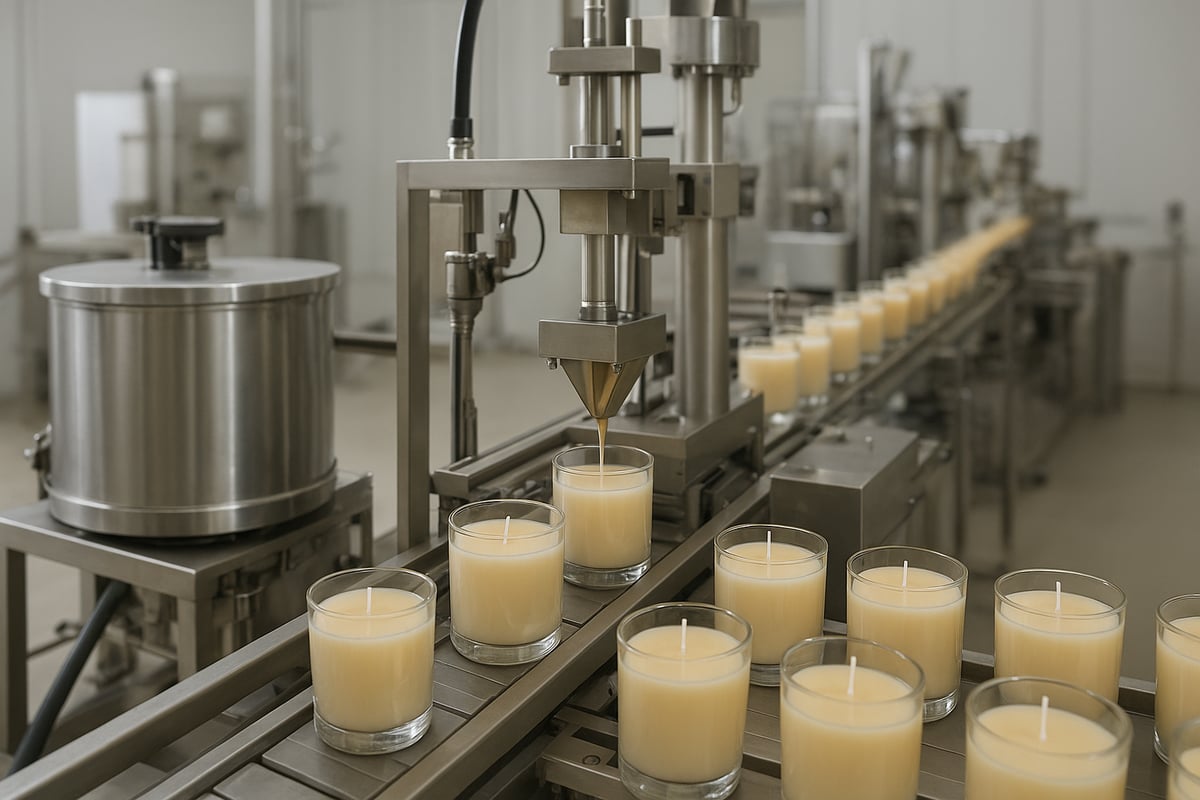
Step 1: Wax Melting and Preparation
The journey begins with loading raw wax, such as paraffin, soy, or beeswax, into the candle production machine. High-grade melters use precise temperature controls and gentle agitation to ensure uniform melting. This stage is crucial for blending additives, dyes, or fragrances evenly throughout the wax.
Operators monitor the process closely, adjusting settings to match the chosen wax type. Accurate temperature management prevents scorching and preserves the integrity of scents and colours. By automating this step, manufacturers achieve consistent batches with minimal manual intervention, laying a strong foundation for the rest of the process.
Step 2: Moulding and Pouring
Once the wax reaches the ideal temperature, the candle production machine moves to moulding and pouring. Automated pouring mechanisms fill moulds with exceptional precision, reducing spillage and ensuring each candle is the same size and shape.
Moulds can be swapped out quickly for different candle styles, such as pillars, containers, or novelty shapes. The machine’s programmable controls allow for rapid changeovers, which is vital for manufacturers offering a broad product range. By maintaining steady pouring rates, the system minimises air bubbles and surface defects, which directly enhances product quality.
Step 3: Cooling and Setting
After pouring, the filled moulds travel through controlled cooling chambers or along conveyor belts. The candle production machine manages cooling speed to prevent defects such as cracking, especially in larger candles.
Proper cooling ensures the wax contracts at the right rate, helping candles retain their shape and finish. Some machines even use fans or chilled air to accelerate the process for high-volume production. By standardising this step, manufacturers can produce candles with smooth surfaces and reliable structural integrity, ready for demoulding.
Step 4: Demoulding and Trimming
With the candles fully set, the candle production machine proceeds to demoulding. Automated systems gently release candles from their moulds, reducing the risk of damage or deformation.
Next, the machine trims excess wax and centres the wick, ensuring each candle meets strict quality standards. Any leftover wax is collected and recycled, promoting efficiency and sustainability. This integrated approach not only speeds up production but also reduces waste, making the process both cost-effective and environmentally friendly.
Step 5: Labelling and Packaging
The penultimate stage involves labelling and packaging, which the candle production machine handles with precision. Automated equipment applies labels and batch codes, then boxes the candles for shipment or retail display. This step can be customised for private-label or branded products, allowing flexibility for different business models.
Attention to labelling and packaging is vital for product presentation and compliance. For those seeking best practices in post-production care, manufacturers often refer to Candle care and maintenance tips to ensure candles remain in top condition after leaving the factory.
Step 6: Quality Control and Batch Testing
The final step in the candle production machine workflow is rigorous quality control. Automated inspection systems check for visual defects, correct weight, and consistent scent distribution. Sampling protocols are followed to ensure every batch meets regulatory and customer standards.
All results are logged digitally for traceability, enabling quick responses to any issues. This level of quality assurance not only builds customer trust but also streamlines compliance with industry regulations. The integration of smart monitoring in this stage demonstrates how modern machines support both efficiency and excellence in candle manufacturing.
Cost Analysis and ROI: Investing in a Candle Production Machine
Investing in a candle production machine is a major decision for any manufacturer. Whether you are launching a new venture or scaling an established business, understanding the full cost landscape is vital. Let us break down the key financial considerations, from upfront investment to long-term returns.
Upfront and Ongoing Costs
The initial price of a candle production machine can vary significantly. Entry-level manual machines may start from £2,000 to £5,000, while semi-automatic models typically range from £10,000 to £30,000. Fully automated lines designed for industrial output often exceed £60,000, depending on features and capacity.
Ongoing expenses include electricity, regular maintenance, spare parts, and consumables such as wicks, labels, and packaging. Energy-efficient machines can reduce power bills by up to 15 percent compared to older models, further impacting your bottom line.
| Machine Type | Typical Output (candles/hour) | Upfront Cost (GBP) | Best For |
|---|---|---|---|
| Manual | 100 | £2,000 - £5,000 | Hobbyists, small batch |
| Semi-automatic | 400 - 800 | £10,000 - £30,000 | Growing businesses |
| Fully automatic | 1,000+ | £60,000+ | Industrial production |
Productivity Gains and Labour Savings
One of the biggest advantages of upgrading to a modern candle production machine is the reduction in manual labour. Automated systems can cut staffing costs by up to 30 percent, as a smaller team can operate and maintain high-output lines with minimal supervision.
Faster production speeds and consistent quality also mean fewer rejects and less waste. Over a year, this can translate into substantial cost savings and improved profit margins, especially when meeting high-volume orders or tight deadlines.
ROI Calculations and Breakeven Points
Determining the return on investment for a candle production machine requires careful analysis. Start by estimating your expected daily output, subtracting labour and energy savings, and factoring in maintenance. For example, a small business investing £15,000 in a semi-automatic model might reach breakeven in as little as 18 months if it doubles its monthly output and reduces manual hours.
Larger manufacturers investing in advanced automation often see even faster ROI, especially when scaling up to meet growing market demand. For an in-depth breakdown of setup costs and ROI calculations, the Candle Manufacturing Plant Project Report 2025 provides valuable industry benchmarks.
Real-World Example: UK Manufacturer Success
A recent case study highlights a UK candle producer that increased output by 50 percent within six months of upgrading to a new candle production machine. The move not only boosted production capacity but also reduced downtime and improved batch consistency. This enabled the business to secure larger contracts and expand into new retail markets.
Resale Value, Lifespan, and Funding
Quality candle production machines hold their value well, especially if maintained with regular servicing and genuine parts. Most industrial models have a lifespan of 10 to 15 years, and reputable manufacturers offer warranties and technical support.
Financing options and grants are available for UK and EU businesses investing in manufacturing equipment. Exploring these opportunities can ease the upfront financial burden and accelerate your path to profitability.
A smart investment in the right candle production machine can transform your operation, increasing efficiency, quality, and competitiveness in a dynamic market.
How to Choose the Right Candle Production Machine for Your Business
Selecting the ideal candle production machine is a pivotal decision that shapes your business's efficiency, scalability, and long-term success. Whether you are launching a start-up or scaling an established brand, a strategic approach to machine selection is essential for meeting your unique goals.
Assessing Production Needs and Scale
Understanding your production requirements is the first step in choosing a candle production machine that fits your business. Consider your daily and weekly output targets, desired candle types, and available workspace. Are you aiming for artisan batches or industrial-scale production?
Use the table below to guide your decision:
| Business Type | Output (Candles/Hour) | Recommended Machine Type |
|---|---|---|
| Hobbyist | Up to 100 | Manual |
| Small Business | 100–500 | Semi-Automatic |
| Industrial | 1,000+ | Fully Automatic |
Start-ups may benefit from semi-automatic options, balancing investment and flexibility. Established brands often need fully automated solutions for higher throughput and consistency. For more practical insights on scaling your operation, the Show Up, Go Up: Blog for Candle Makers offers valuable guidance for business owners navigating these choices.
Evaluate your growth projections. Investing in a candle production machine that matches your scale today, but allows for future expansion, is a wise move. Carefully align machine type with your business model, ensuring you do not over or under-invest.
Evaluating Machine Features and Supplier Reputation
The next consideration is which features are non-negotiable for your candle production machine. Automation, digital controls, and built-in safety mechanisms can enhance productivity and reduce risk. Look for machines with programmable settings, remote monitoring, and compatibility with various wax types.
Key features to prioritise:
- Touchscreen control interfaces
- Modular design for easy upgrades
- Energy-efficient components
- Reliable safety features
Supplier reputation is just as vital. Investigate manufacturer support, warranty coverage, and the availability of spare parts. Check online reviews and testimonials for real-world feedback. Insights from industry professionals, like those found in Meet the Maker: Love Scottish, shed light on the practical benefits and challenges of different machines in a working environment.
A reputable supplier will offer comprehensive after-sales support and training, reducing downtime and ensuring your investment delivers maximum value. Do not hesitate to ask for demonstrations or sample runs to verify machine performance.
Installation, Training, and Ongoing Support
Before your candle production machine arrives, assess your facility for adequate power, ventilation, and space. Proper site preparation avoids costly delays. Installation should be handled by certified technicians to guarantee correct setup and compliance with safety standards.
Invest in staff training programmes to ensure operators understand machine functions, maintenance routines, and emergency procedures. This not only safeguards your team but also extends the lifespan of your equipment.
Ongoing support from your supplier is crucial. Opt for partners who provide fast-response technical assistance, clear maintenance schedules, and easy access to replacement parts. Regular servicing prevents unexpected breakdowns, keeping your production line running smoothly.
Proactive planning for installation and support minimises downtime and maximises the return on your candle production machine investment. Well-trained staff and reliable service are the backbone of efficient operations.
Future-Proofing Your Investment
The candle industry is dynamic, with trends shifting towards eco-friendly materials, refillable designs, and custom scents. Choose a candle production machine that is modular or upgradable, allowing you to adapt as market demands evolve.
Scalability is essential. Machines with interchangeable moulds, flexible automation, and software updates will stay relevant as your business grows. Monitor emerging technologies such as AI-driven quality control and smart monitoring to maintain a competitive edge.
Consider how your machine accommodates new product lines or private-label production. Businesses that pivot quickly can capture new market segments and boost profitability. Drawing inspiration from industry leaders showcased in professional profiles, you can see the benefits of forward-thinking equipment choices.
Investing in a future-ready candle production machine ensures your business thrives, regardless of changing consumer preferences or regulatory shifts. Strategic planning today secures your place in tomorrow’s market.
Candle Production Machine Trends and Market Insights for 2025
The landscape for candle production machine technology in 2025 is evolving at an unprecedented pace. Manufacturers are embracing innovation to stay competitive, meet market demands, and comply with stricter regulations.
Smart factories are leading the way, with integrated systems that monitor every stage of production. The use of AI-driven quality control is becoming standard, enabling manufacturers to detect defects instantly and ensure consistency in every batch. Recent advances in intent-based industrial automation, as explored in Agentic AI for Intent-Based Industrial Automation, are streamlining operations and reducing human error. This shift means a candle production machine can now adapt quickly to changing recipes or batch sizes, improving overall productivity.
Private-label and bespoke candle manufacturing are gaining ground, as consumers seek more personalised options. Compact automation equipment makes it feasible for small-batch and artisanal brands to compete with larger players. These flexible machines allow for quick changeovers, supporting unique scents, shapes, and packaging that cater to niche markets.
Sustainability is a dominant theme. Consumers increasingly prefer candles made from natural waxes and packaged in recyclable materials. As a result, manufacturers are investing in candle production machine models that use less energy, produce minimal waste, and offer compatibility with eco-friendly ingredients.
Regulatory changes in the UK and EU are also shaping machine design. Stricter standards for energy efficiency, emissions, and product traceability are influencing the features manufacturers prioritise. Machines now often include advanced data logging and batch tracking, making compliance easier and boosting consumer trust.
Looking ahead, the next three to five years will see further integration of AI, more modular and upgradeable machines, and a continued rise in small-batch production. The table below summarises key trends:
| Trend | Impact on Candle Production Machine |
|---|---|
| Smart Factories & AI | Enhanced quality, efficiency |
| Private-Label & Bespoke Production | Greater flexibility |
| Sustainability Focus | Eco-friendly designs |
| Regulatory Compliance | Advanced data tracking |
| Compact Automation | Growth for artisanal brands |
For manufacturers, staying ahead means investing in the right candle production machine technology, adapting to consumer and regulatory shifts, and embracing a culture of innovation.
With so much innovation shaping the candle industry in 2025, it’s inspiring to see how both tradition and technology can work together to create something truly special. Whether you’re just starting out or looking to advance your production, understanding the right machinery is key to crafting candles that stand out—just as we do here in Scotland with our bespoke scents and meticulous attention to detail. If you’d like to experience the artistry behind expertly made candles, why not discover our festive range and Shop Christmas Candles for inspiration?