

Size Format Guide: Your Essential Handbook for 2026
Struggling to keep up with every new size format in both digital and physical spaces? You are certainly not alone, as shifting standards can quickly become overwhelming.
This handbook is your essential guide to mastering the right size format for any need in 2026. Here, you will discover the most important size formats across industries, see how evolving standards impact everyday choices, and learn practical steps for selecting the best fit.
Gain clarity and confidence as you explore expert tips and actionable advice for businesses and individuals. Read on to simplify your decision-making and stay ahead of the curve.
Understanding Size Formats: Definitions and Significance
Navigating the world of size format can feel overwhelming, especially as both digital and physical standards evolve. To gain clarity, it is essential to start with a solid understanding of what size format means, why it matters in 2026, and the challenges that come with choosing the right format.

What Are Size Formats?
A size format refers to the standardised dimensions used to define the size of physical or digital objects. In the physical world, this might mean the measurements of paper, packaging, or manufactured goods. Digitally, it includes image resolutions, aspect ratios, and screen sizes.
Several industries rely on precise size format standards. These include print and publishing, digital media, packaging, and manufacturing. Each industry may use different units of measurement, such as metric (millimetres, centimetres), imperial (inches), or digital units like pixels and DPI/PPI.
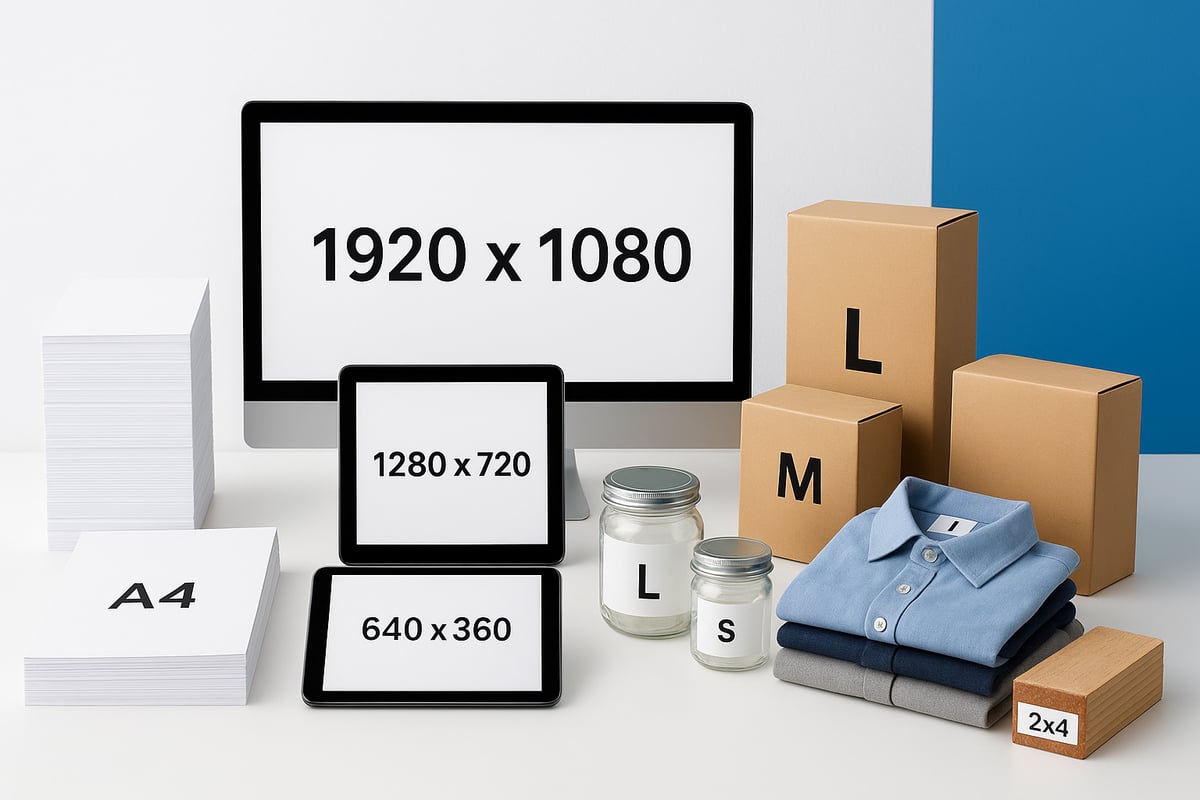
For example, in print, the A4 format is widely used internationally, while the Letter format is common in North America. You can learn more about these standards in the International Standard Paper Sizes Overview. In digital media, common image resolutions include 1920x1080 pixels for HD displays. Packaging often uses custom dimensions tailored to product and shipping needs.
Understanding the correct size format ensures compatibility between systems and consistency in production, whether you are designing a magazine, creating a website, or manufacturing goods.
Why Size Formats Matter in 2026
The significance of size format is only increasing as globalisation and digital transformation accelerate. Businesses and individuals must navigate a growing landscape of international standards and consumer expectations.
Why is this so important in 2026? The right size format improves usability and compatibility across platforms and devices. It also boosts efficiency in production, distribution, and communication. A recent survey revealed that 73% of businesses encounter issues due to incorrect size format choices, leading to operational delays and extra costs.
The consequences of getting size format wrong are tangible. Wasted materials, increased shipping expenses, and poor user experiences can all stem from mismatched or outdated sizing. For example, sending a product in the wrong packaging size may result in higher shipping fees and damage during transport. In digital design, using the wrong image resolution can cause slow load times or pixelation, impacting user satisfaction.
By prioritising the correct size format, businesses safeguard resources and enhance their brand reputation.
Key Challenges and Considerations
Selecting the right size format involves several challenges. Regional differences play a significant role, with the UK, US, EU, and Asia each following unique sizing conventions. For instance, publishing in the UK might default to A4, while US publishers use Letter. Digital standards can also differ by region and device.
Industry-specific requirements must be taken into account. Publishing, e-commerce, architecture, and packaging all have their own standards and expectations. The rise of custom sizes and on-demand production adds further complexity, requiring flexible solutions.
Legal and compliance issues cannot be overlooked. Regulations may dictate certain size format standards, especially for packaging, labelling, and accessibility. Failing to comply can lead to fines and reputational damage.
Being aware of these challenges helps individuals and businesses make informed choices and avoid costly mistakes.
Major Size Formats Across Industries
Navigating size format standards is essential for every industry in 2026. Whether in print, digital, packaging, retail, or construction, selecting the right size format impacts efficiency, compliance, and customer satisfaction. This section explores the dominant size format conventions shaping each sector, offering clarity on what matters most for your business or project.
Print and Publishing
Size format choices in print and publishing remain foundational. The ISO 216 series, especially A4 (210 x 297 mm) and A5, dominates in the UK, EU, and much of the world. North America prefers Letter (8.5 x 11 inches) and Legal (8.5 x 14 inches), creating challenges for international document exchange.
Magazines, books, and catalogues each have typical size format standards. For example, novels often use B-format (129 x 198 mm) or Demy (138 x 216 mm). Magazines tend to follow A4 or custom sizes for visual impact.
Designers must also consider bleed, trim, and safe zones, ensuring artwork and text are not cut off during production. Ignoring these critical size format details can result in costly reprints or poor-quality outputs.
| Paper Size | Dimensions (mm) | Region |
|---|---|---|
| A4 | 210 x 297 | ISO, UK, EU |
| Letter | 216 x 279 | US, Canada |
| Legal | 216 x 356 | US, Canada |
Careful attention to size format in publishing ensures compatibility, professional results, and cost savings.
Digital Media and Design
Digital media has its own evolving size format standards. In 2026, web content typically uses image sizes optimised for high-DPI displays, such as 1920 x 1080 pixels for hero banners or 1080 x 1080 pixels for social media posts. The size format affects clarity and load times, impacting user experience.
Video aspect ratios are also critical. While 16:9 remains standard for most platforms, vertical videos (9:16) are surging in popularity due to mobile use. Square (1:1) and emerging ratios cater to platform-specific requirements.
Responsive design demands flexible size format strategies. Designers use scalable units and adaptive layouts to ensure visuals remain crisp across devices. DPI (dots per inch) or PPI (pixels per inch) considerations are essential when preparing graphics for print versus screen.
Choosing the correct digital size format reduces distortion, enhances brand consistency, and ensures content looks sharp everywhere.
Packaging and Manufacturing
The packaging and manufacturing sectors rely on precise size format specifications for efficiency and compliance. Common box formats, such as FEFCO 0201 for corrugated cartons, are chosen for ease of stacking and shipping.
Product packaging must fit retail shelf standards and shipping constraints, which often means balancing international and local size format rules. Increasingly, businesses are prioritising eco-friendly materials and optimised packaging to reduce waste.
For example, in candle manufacturing, selecting the right jar size format is crucial for safety, branding, and supply chain consistency. Standards vary, but guides like Candle jar sizing and suppliers help manufacturers align with industry expectations.
Sustainability trends are influencing size format choices, with brands seeking minimal, recyclable, or reusable packaging to meet consumer and regulatory demands.
Retail and E-commerce
Retail and e-commerce sectors face unique size format challenges. Clothing brands must provide clear, consistent sizing to reduce returns and improve customer trust. Electronics, home goods, and other products also rely on accurate size format information for online sales.
Internationalisation complicates matters as size format standards differ between regions. For instance, UK shoe sizes do not directly match US or EU equivalents, causing confusion if not properly communicated.
Many retailers now offer detailed size guides and comparison tables online. These resources help shoppers find the correct size format, minimising returns and boosting satisfaction.
A well-managed size format strategy in e-commerce is essential for global reach and operational efficiency.
Architecture and Construction
Size format standards in architecture and construction underpin every project phase. Building materials like timber, steel, and bricks are produced in standard sizes to streamline design and procurement.
Floor plans use established scale conventions, such as 1:100 or 1:50, allowing for clear communication between architects, builders, and regulators. Regional codes dictate acceptable size format ranges for doors, windows, and structural elements.
Regulatory compliance is non-negotiable. Adhering to prescribed size format guidelines ensures safety, quality, and legal approval.
In this sector, accurate size format planning reduces waste, prevents costly errors, and guarantees project success.
The Evolution of Size Standards: 2026 and Beyond
The journey of the size format is both complex and fascinating. As industries have grown more interconnected, the systems that define sizes—whether for paper, packaging, or digital design—have evolved to meet new demands. Understanding this evolution is crucial for anyone seeking clarity in a world where precision and compatibility are more important than ever.
Historical Overview
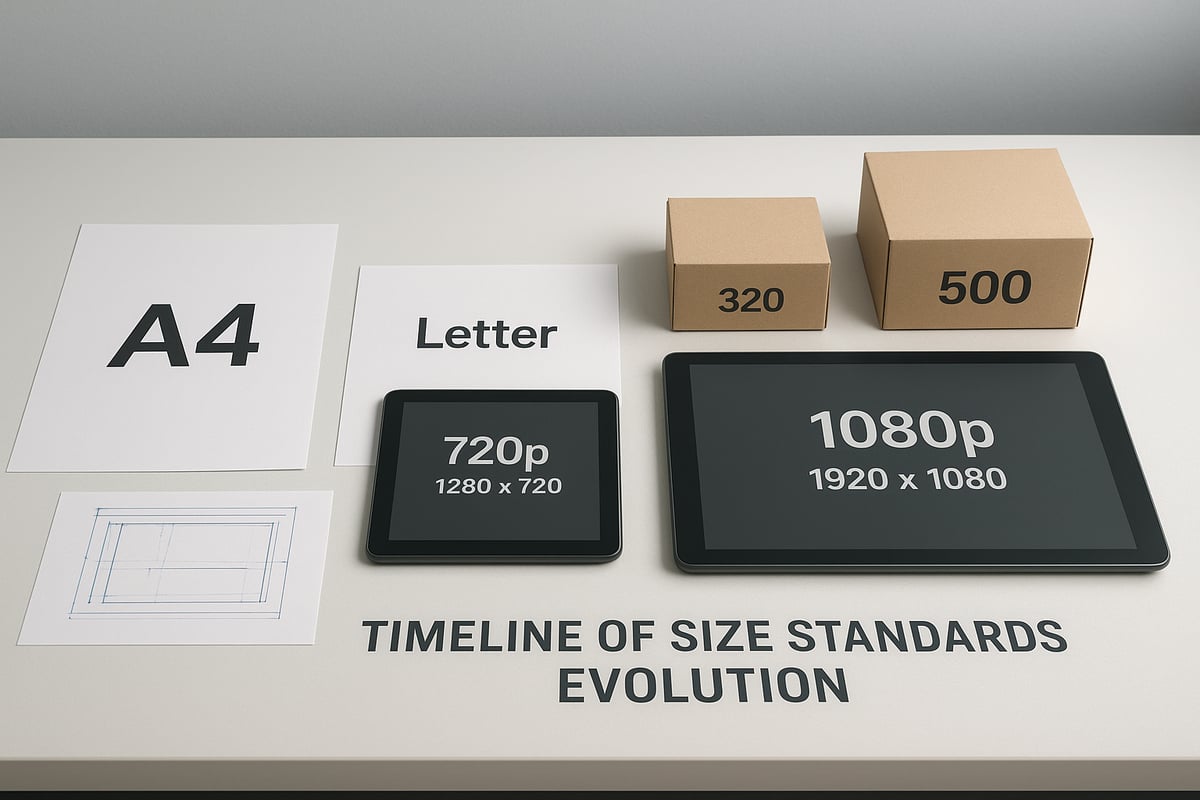
The concept of a standardised size format dates back over a century. Early efforts, such as the DIN 476 standard in Germany, laid the groundwork for what would become the widely adopted ISO 216 paper sizes, including A4. These formats provided consistency for businesses and governments, making communication and production more efficient.
In North America, different approaches emerged, such as the ANSI standards and unique formats like Letter and Legal. Global trade and technology pushed industries to reconsider their size format choices, leading to the development of international standards.
As digital technology advanced, the definition of size format expanded beyond physical dimensions. Resolution, aspect ratio, and pixel density became key factors for digital media. Regulatory bodies and industry groups, such as those detailed in the SBA's 2024 Size Standards Methodology White Paper, have played a pivotal role in shaping and revising these standards to reflect changing needs.
Today, the historical progression of size format continues to impact how businesses operate and innovate.
Current Trends Shaping 2026
The landscape of size format in 2026 is marked by rapid digital transformation. Digital-first design has become the norm, with organisations prioritising formats that work seamlessly across devices and platforms. For example, responsive web design demands flexible image and video sizes, ensuring content looks sharp on both smartphones and high-resolution displays.
Personalisation and customisation are more accessible than ever. Manufacturing now offers bespoke size format options, catering to unique customer demands. This shift has led to the rise of on-demand production, where products are crafted to precise specifications.
Sustainability is another influential trend. Companies are optimising packaging and print materials to reduce waste, often by re-evaluating their size format choices. Regulatory changes and consumer preferences drive the adoption of eco-friendly standards. As a result, businesses that adapt quickly to these trends can enhance efficiency and brand reputation.
Industry leaders are responding by updating their size format guides and investing in technology that supports adaptable, scalable sizing across multiple channels.
Innovations and Future Outlook
Looking ahead, size format standards are expected to become even more dynamic. Smart packaging and adaptive formats are emerging, allowing products to adjust their size format in response to environmental factors or user needs. AI-driven recommendations will soon help businesses select optimal sizes based on data analysis, streamlining production and improving user experience.
There is a clear movement towards convergence between digital and physical size format standards. As cross-platform compatibility grows, industries will likely adopt unified systems that simplify global operations. This evolution will empower both businesses and individuals to make informed decisions, minimise waste, and stay competitive.
In summary, the future of size format is shaped by innovation, sustainability, and a commitment to meeting diverse market demands.
How to Choose the Right Size Format: Step-by-Step Guide
Choosing the right size format is crucial for successful projects in print, digital, packaging, and beyond. This step-by-step guide will help you navigate the process confidently, ensuring your final product meets both user and business needs.

Step 1: Define Your Purpose and Audience
Start by clarifying the intended use of your project. Will your size format be used for print materials, digital graphics, or physical packaging?
Identify your target audience and their preferences. For example, accessibility needs may dictate larger font sizes or specific layouts. Consider the context: is this for mass production, bespoke items, or digital-first experiences?
Ask yourself:
- Who will use or receive this item?
- What are their expectations regarding the size format?
- Does the format need to adapt to different platforms or regions?
Making these decisions early ensures your project aligns with real-world requirements.
Step 2: Research Industry and Regional Standards
Investigate current standards relevant to your industry. Many sectors have established size format guidelines, such as ISO for paper or specific image dimensions for websites.
Compare international and local standards. For instance, A4 is standard in the UK and EU, while Letter is used in the US. Regulations may also affect choices, especially in packaging, publishing, or manufacturing.
Key actions:
- Consult up-to-date size charts and regulatory documents
- Review competitor practices and industry benchmarks
- Note any legal requirements for your intended market
A table can help summarise differences:
| Region | Paper Standard | Common Size Format |
|---|---|---|
| UK/EU | ISO | A4 |
| US | ANSI | Letter |
| Asia | JIS | B5 |
Aligning with the right standards helps avoid costly errors.
Step 3: Evaluate Technical Specifications
Assess the technical requirements for your size format. This includes resolution (DPI/PPI) for images, aspect ratios for video, and material tolerances for manufacturing.
Determine compatibility with your existing systems and supply chains. For digital projects, confirm that images and videos display correctly across devices. For physical products, ensure materials are available in your chosen size format.
Checklist:
- Confirm resolution and aspect ratio requirements
- Check material availability and tolerances
- Validate compatibility with production equipment or digital platforms
Technical precision at this stage prevents production delays and quality issues.
Step 4: Factor in Sustainability and Cost
Sustainability and cost are increasingly important in 2026. Choose a size format that maximises material efficiency and minimises waste. For packaging, consider formats that fit standard shipping boxes and reduce excess material.
Evaluate the environmental impact of your choices. Opt for recyclable materials and efficient designs where possible. Balancing these factors can also help control costs.
For a closer look at packaging options and real-world constraints, explore this Packaging and shipping constraints resource to see how different size formats influence product presentation and shipping.
Prioritise solutions that are both eco-friendly and budget-conscious.
Step 5: Test, Prototype, and Iterate
Before finalising your size format, create prototypes or digital previews. Testing allows you to identify and resolve issues early, whether in print, online, or physical production.
Gather feedback from stakeholders, end users, or team members. Use mock-ups for packaging, digital previews for web content, or sample runs for print materials. Adjust your size format based on practical insights.
Key steps:
- Build prototypes or mock-ups
- Solicit feedback from diverse sources
- Refine and iterate as needed
This approach ensures your final product is effective and well-received.
Step 6: Document and Communicate Clearly
Maintain thorough records of your chosen size format, including specifications, templates, and visual guides. Clear documentation helps teams and partners understand requirements, reducing errors and miscommunication.
Share visual guides, annotated diagrams, or code snippets for digital projects. Consistent communication ensures everyone is aligned on the size format, from design to delivery.
Tips for effective documentation:
- Use shared templates and guides
- Keep records updated with any changes
- Communicate standards across all relevant teams
Clear documentation is the foundation of successful, repeatable processes.
Common Pitfalls and Expert Tips for Size Format Success
Navigating the world of size format can be challenging, even for experienced professionals. The right approach can save time, reduce costs, and improve outcomes, while common mistakes often lead to disappointment and inefficiency. Understanding pitfalls and learning from industry leaders will empower you to make informed decisions in 2026.
Frequent Mistakes to Avoid
Even small errors in size format selection can result in significant setbacks. One of the most frequent mistakes is overlooking bleed and safe zones in print projects, leading to unintended cropping or white edges on finished materials. Another common issue is relying on outdated digital size guides, which can cause images or videos to appear distorted, especially on new devices.
Manufacturing and packaging often suffer from ignoring shipping constraints or failing to adapt to evolving shelf requirements. For instance, using a size format that does not meet retailer specifications can result in rejected shipments or wasted materials. In candle making and production, choosing incorrect size formats for moulds or packaging may lead to increased breakage or inefficient storage.
Best Practices from Industry Leaders
Industry leaders consistently review and update their size format guidelines to ensure accuracy and relevance. They maintain clear communication between departments, which helps prevent specification errors and ensures consistency across print, digital, and packaging assets.
Automation tools are widely used for size format checks, reducing the risk of manual mistakes. Leaders also prioritise continuous education, keeping staff up to date on the latest standards and trends. Regularly updating templates and guides, and involving cross-functional teams in decision-making, are proven ways to maintain high standards and adaptability.
- Update size format references annually.
- Use automation for accuracy and speed.
- Foster collaboration across design, production, and logistics.
Case Examples and Data
Real-world examples demonstrate the value of careful size format management. A major retailer managed to reduce product returns by 15% after improving their online size guides, making it easier for customers to select the right fit. In publishing, a leading house achieved a 10% cost saving by standardising their size formats, streamlining production and reducing material waste.
Fashion brands are also making strides in this area. According to the Vogue Business Spring/Summer 2026 Size Inclusivity Report, embracing more inclusive size formats has driven customer satisfaction and reduced returns across the industry. These successes highlight the importance of data-driven decisions and ongoing adjustments.
Expert Tips for 2026
To succeed with size format planning in 2026, experts recommend these practical steps:
- Stay informed on changing standards and emerging trends.
- Invest in training and resources for your team.
- Prioritise flexibility, allowing for custom and on-demand size formats.
- Document all size format choices clearly for internal and external partners.
- Test new formats through prototypes or digital previews before full rollout.
By proactively addressing these areas, you can avoid costly mistakes and position your business for long-term success with any size format challenge.
Resources, Tools, and Further Reading
Navigating the world of size format standards requires reliable resources, practical tools, and ongoing learning. Below, you will find curated guides, software, and key references to help you stay ahead in 2026.
Essential Size Charts and Guides
Having access to up-to-date size format charts is crucial for consistency and accuracy. Explore these widely recognised resources:
- ISO and ANSI standard size charts for paper, packaging, and digital formats.
- Industry-specific guides from publishing, manufacturing, and construction bodies.
- Downloadable templates and calculators for quick size format conversions.
- For packaging and manufacturing trends, consult the Plastics Industry Association's 2025 Size and Impact Report for comprehensive analysis and data.
Always verify that your chosen size format aligns with the latest standards for your sector.
Recommended Software and Tools
The right software can streamline size format selection and reduce costly errors. Consider these popular tools:
- Adobe Creative Cloud suite, offering built-in size format presets for print and digital media.
- CAD software such as AutoCAD and SketchUp, ideal for architecture and construction.
- Packaging design platforms that calculate optimal box sizes for shipping and retail.
- Online calculators and plugins for instant size format checks within your workflow.
Integrating these tools helps ensure every size format decision is precise and efficient.
Where to Stay Updated
Keeping informed on size format standards is vital for both individuals and businesses. Reliable sources include:
- Official websites of ISO, ANSI, and other regulatory bodies.
- Industry associations and trade groups offering webinars and newsletters.
- Online forums and professional communities discussing emerging size format trends.
- Regular updates from design and engineering publications.
Subscribe to relevant channels to receive timely updates on size format changes.
Glossary of Key Terms
Understanding size format terminology enhances communication and reduces confusion. Here’s a quick reference:
| Term | Definition |
|---|---|
| DPI | Dots per inch, used for print resolution |
| PPI | Pixels per inch, relevant for digital screens |
| A4 | Common ISO paper size, 210mm x 297mm |
| Aspect Ratio | Proportional relationship of width to height |
| Bleed | Area extending beyond trim for print designs |
Familiarity with these terms will make navigating size format documentation much easier.
Further Reading and References
Expand your knowledge of size format standards with these trusted materials:
- Books and whitepapers on the history and evolution of size format guidelines.
- Industry articles that analyse the impact of size format on efficiency and cost.
- For niche applications like candle products, review Candle care guidelines and format for practical examples of sizing best practices.
- Research papers and case studies on innovations in size format selection.
These references will help you make informed, future-proof size format decisions.
As we navigate the evolving landscape of size formats together, it becomes clear how much precision and creativity can impact both business and personal projects—especially when attention to detail matters most. At Love Scottish, we understand the value of crafting experiences that blend tradition and innovation, just as you’ll find in this guide. If you’re inspired to bring a touch of Scottish warmth and sensory delight into your space this season, why not explore something special? Discover our thoughtfully curated festive fragrances and Shop Christmas Candles to make this year truly memorable.